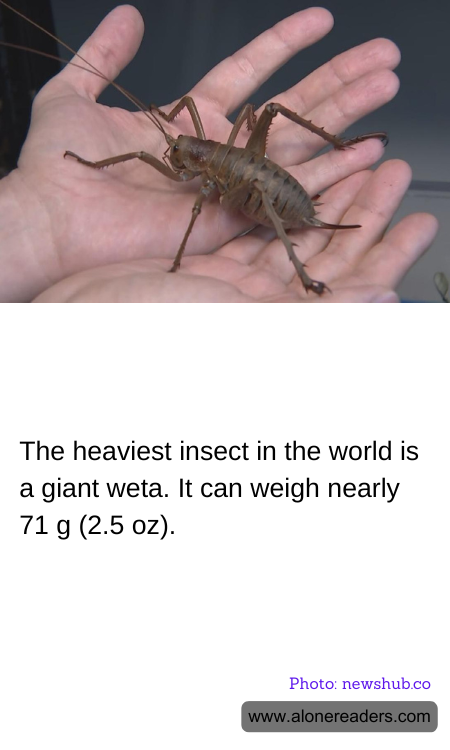
In the fascinating world of insects, where size often seems to defy expectations, the giant weta stands out as a remarkable example of nature's diversity. Native to New Zealand, this extraordinary insect holds the title of the heaviest in the world, with some individuals tipping the scales at nearly 71 grams (2.5 ounces). The giant weta's impressive size and weight make it a subject of intrigue and admiration among entomologists and nature enthusiasts alike.
The giant weta belongs to the family Anostostomatidae and is closely related to crickets and grasshoppers. There are several species of giant weta, but the most famous is the Little Barrier Island giant weta, also known as the wetapunga. These insects are primarily found on offshore islands, where they have been able to thrive without the threat of introduced predators such as rats and cats. The isolation of these islands has allowed the giant weta to evolve into the hefty creatures they are today.
One of the most striking features of the giant weta is its robust and armored appearance. With a body length that can exceed 10 centimeters (4 inches), these insects are equipped with large, spiny legs and a formidable set of mandibles. Despite their intimidating look, giant wetas are herbivorous, feeding on leaves, flowers, and fruit. Their diet and nocturnal habits help them avoid many of the dangers present in their natural habitat.
The giant weta's size is not just a curiosity; it plays a crucial role in its survival. In the absence of mammalian predators, being large and heavy has been an advantage, allowing these insects to avoid being easily preyed upon by birds. However, their size also makes them less agile, which is why they have developed a strategy of remaining still and camouflaged during the day, blending into their surroundings to evade detection.
Conservation efforts are underway to protect the giant weta and its habitat. The introduction of predators to New Zealand's mainland has significantly impacted their populations, leading to a decline in numbers. Conservationists are working to restore and maintain predator-free environments where these remarkable insects can continue to thrive. Breeding programs and habitat restoration projects are vital to ensuring the survival of the giant weta for future generations.
The giant weta serves as a reminder of the incredible diversity of life on Earth and the importance of preserving unique species and ecosystems. Its story highlights the delicate balance of nature and the impact human activity can have on even the most resilient of creatures. As we continue to learn more about the giant weta and its role in the ecosystem, it becomes increasingly clear that every species, no matter how small or seemingly insignificant, plays a part in the intricate web of life.
