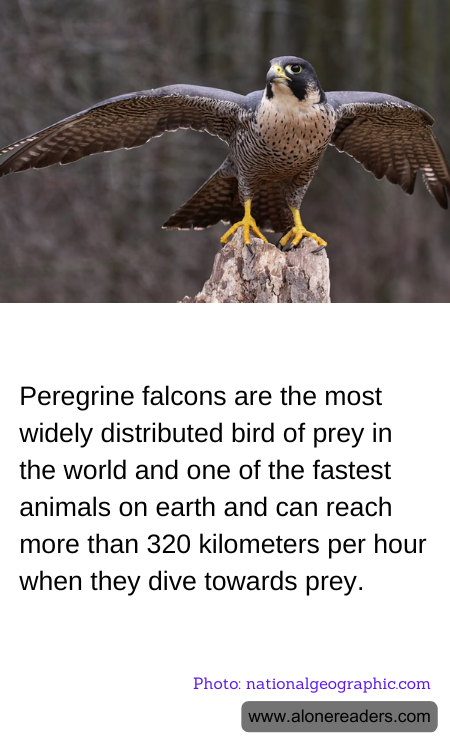
The peregrine falcon, a marvel of the avian world, holds the distinction of being the most widely distributed bird of prey across the globe. Found on every continent except Antarctica, these remarkable birds have adapted to a variety of environments, from urban landscapes to remote wilderness areas. Their adaptability is a testament to their resilience and evolutionary success, making them a fascinating subject for bird enthusiasts and scientists alike.
What truly sets the peregrine falcon apart is its incredible speed. Renowned as one of the fastest animals on the planet, the peregrine falcon can reach speeds exceeding 320 kilometers per hour (approximately 200 miles per hour) during its characteristic hunting stoop, or high-speed dive. This breathtaking velocity is achieved as the falcon tucks in its wings and plummets towards its prey with unparalleled precision. Such speed is not just for show; it is a critical adaptation that allows the peregrine falcon to catch its prey mid-air, often surprising birds such as pigeons and ducks.
The peregrine falcon's hunting prowess is supported by its keen eyesight, which is estimated to be eight times more acute than that of humans. This exceptional vision allows the falcon to spot potential prey from great distances, making it a formidable predator. Once a target is identified, the falcon's streamlined body and powerful wings enable it to execute swift and agile maneuvers, ensuring a successful hunt.
Beyond their physical attributes, peregrine falcons have a fascinating life cycle. They are known for their strong pair bonds, often mating for life. During the breeding season, these birds engage in elaborate aerial displays, showcasing their agility and strength. They typically nest on high cliffs or tall structures, providing a vantage point to survey their surroundings and protect their young from potential threats. The chicks, known as eyases, grow rapidly and are ready to fledge in just over a month, a testament to the species' efficient reproductive strategy.
Despite their current widespread presence, peregrine falcons faced significant challenges in the mid-20th century due to the widespread use of pesticides like DDT, which led to a dramatic decline in their population. Conservation efforts, including the banning of DDT and successful breeding programs, have helped the peregrine falcon make a remarkable recovery. Today, they are a symbol of conservation success and a reminder of the importance of protecting our natural world.
In conclusion, the peregrine falcon is not only a symbol of speed and agility but also a testament to the resilience of nature. Its ability to thrive in diverse environments and its recovery from near extinction highlight the importance of conservation efforts. As we continue to learn from and admire these magnificent birds, they inspire us to appreciate and protect the incredible biodiversity that our planet has to offer.
