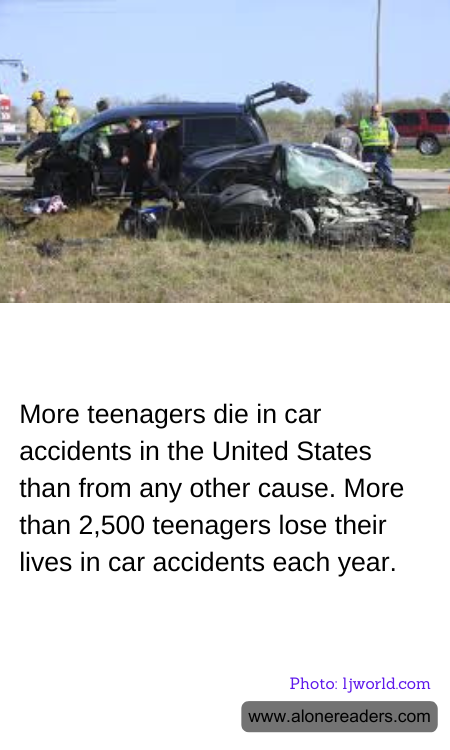
Every year, more than 2,500 teenagers in the United States lose their lives in car accidents, making it the leading cause of death for this age group. This alarming statistic highlights a critical issue that demands attention from parents, educators, policymakers, and the teenagers themselves. The loss of young lives in such preventable circumstances is a tragedy that resonates across communities, leaving families and friends devastated.
Several factors contribute to the high incidence of car accidents among teenagers. Inexperience behind the wheel is a significant factor. Many teenagers are still developing their driving skills and may not yet have the ability to make quick, informed decisions in challenging situations. This lack of experience can lead to poor judgment, especially in high-pressure scenarios such as heavy traffic or adverse weather conditions.
Distractions also play a major role in teenage car accidents. The proliferation of smartphones and other electronic devices has introduced new hazards for young drivers. Texting, using social media, or even changing music tracks can divert attention from the road, increasing the likelihood of an accident. Additionally, the presence of peers in the car can be distracting, as teenagers may feel pressured to engage in conversations or show off, further compromising their focus.
Speeding is another critical factor. Teenagers may underestimate the dangers of driving at high speeds or overestimate their ability to control a vehicle. This overconfidence can lead to reckless driving behaviors, which significantly increase the risk of accidents. Moreover, the lack of seatbelt use among teenagers exacerbates the severity of injuries sustained in crashes, often turning survivable incidents into fatal ones.
Addressing this issue requires a multifaceted approach. Education is paramount; comprehensive driver education programs that emphasize the importance of safe driving practices can equip teenagers with the knowledge they need to navigate the roads responsibly. Parents also play a crucial role by setting a good example and enforcing rules about safe driving habits, such as wearing seatbelts and avoiding distractions.
Legislation can also make a difference. Graduated driver licensing (GDL) programs, which introduce driving privileges in phases, have been shown to reduce accidents among teenagers by allowing them to gain experience under less risky conditions. Enforcing stricter penalties for violations like speeding and distracted driving can further deter risky behaviors.
Ultimately, reducing the number of teenage fatalities in car accidents requires a collective effort. By fostering a culture of safety and responsibility, we can help ensure that teenagers are better prepared to handle the challenges of driving. Through education, parental guidance, and supportive legislation, we can work towards a future where fewer families have to endure the heartbreak of losing a young life to a car accident.
