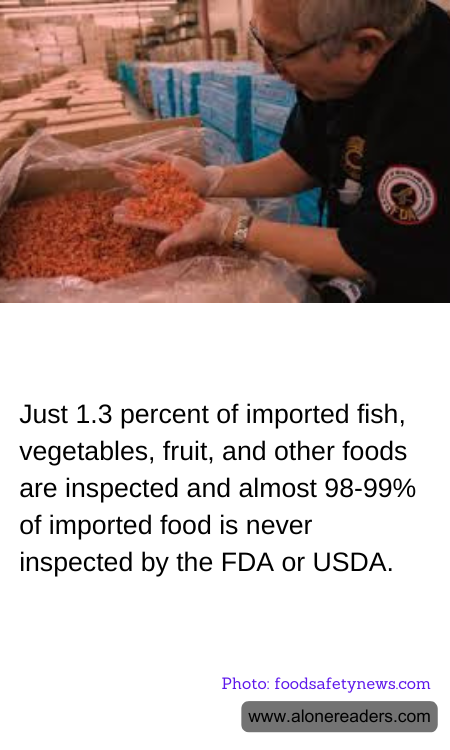
In today's globalized world, the journey of food from farm to table often spans continents. This international trade brings a diverse array of flavors and nutrients to our plates, but it also raises significant concerns about food safety. A startling fact that underscores this issue is that only about 1.3 percent of imported fish, vegetables, fruit, and other foods are inspected by U.S. regulatory bodies such as the Food and Drug Administration (FDA) and the United States Department of Agriculture (USDA). This means that nearly 98-99% of imported food enters the country without undergoing any inspection by these agencies.
The sheer volume of food imports into the United States makes comprehensive inspection a daunting task. With millions of shipments arriving annually, the FDA and USDA face logistical challenges in scrutinizing every item. This limited inspection capacity is primarily due to resource constraints, including funding and manpower, which restrict the agencies' ability to monitor the vast influx of goods effectively. As a result, the responsibility of ensuring food safety often falls on the exporting countries and the importers themselves.
While the FDA and USDA have established guidelines and standards for food safety, the reliance on foreign governments and producers to adhere to these standards can be problematic. Different countries have varying regulations and enforcement capabilities, which can lead to inconsistencies in food safety practices. This situation is further complicated by the complexity of global supply chains, where food products may pass through multiple countries before reaching the United States. Each step in this chain presents opportunities for contamination or mishandling, which may go undetected without thorough inspection.
Despite these challenges, there are measures in place to mitigate risks. The FDA employs a risk-based approach to prioritize inspections, focusing on products and countries with a history of violations or higher risk profiles. Additionally, advancements in technology, such as data analytics and blockchain, are being explored to enhance traceability and transparency in the supply chain. These innovations hold promise for improving food safety oversight, but their widespread implementation is still in progress.
Consumers also play a crucial role in ensuring food safety. By staying informed about food recalls and advisories, individuals can make more informed choices about the products they purchase. Supporting local and domestic producers can also reduce reliance on imported foods, thereby minimizing exposure to potential risks associated with uninspected imports.
Ultimately, the low percentage of inspected imported foods highlights the need for a multifaceted approach to food safety. Strengthening international cooperation, investing in inspection resources, and leveraging technology are essential steps toward safeguarding the food supply. As consumers, being vigilant and proactive can contribute to a safer food environment for everyone.
