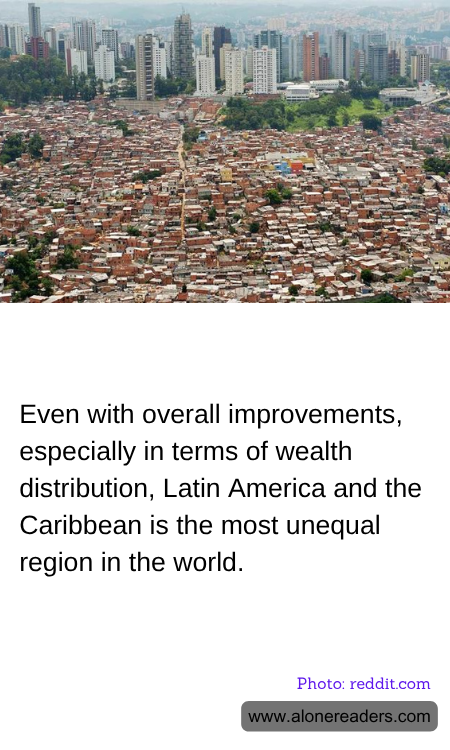
Latin America and the Caribbean, a region rich in cultural diversity and natural resources, has long been grappling with the challenge of inequality. Despite notable improvements in wealth distribution over recent decades, it remains the most unequal region in the world. This persistent disparity is a complex issue, deeply rooted in historical, economic, and social factors that continue to shape the lives of millions.
In recent years, many countries in Latin America and the Caribbean have made strides in reducing poverty and improving access to education and healthcare. Economic growth, driven by a boom in commodity prices and increased foreign investment, has contributed to a rise in the overall standard of living. Governments have implemented policies aimed at redistributing wealth, such as conditional cash transfer programs, which have helped lift many families out of extreme poverty. These efforts have led to a burgeoning middle class and have improved the quality of life for many.
However, despite these advancements, the gap between the rich and the poor remains stark. The wealthiest 10% of the population controls a disproportionate share of the region's wealth, while a significant portion of the population continues to live in poverty. This inequality is not just economic but also manifests in access to quality education, healthcare, and employment opportunities. Rural areas, indigenous communities, and marginalized groups often bear the brunt of this disparity, facing systemic barriers that hinder their social and economic mobility.
The roots of inequality in Latin America and the Caribbean can be traced back to colonial times, where land and resources were concentrated in the hands of a few. This legacy of unequal land distribution and power dynamics has persisted, influencing modern economic structures and policies. Additionally, political instability and corruption have often exacerbated the problem, diverting resources away from public services and infrastructure that could benefit the broader population.
Addressing inequality in the region requires a multifaceted approach. Governments need to continue investing in education and healthcare to ensure that all citizens have the opportunity to succeed. Strengthening democratic institutions and promoting transparency can help combat corruption and ensure that resources are allocated fairly. Furthermore, fostering inclusive economic growth that creates jobs and opportunities for all segments of society is crucial.
International cooperation and support can also play a role in addressing these challenges. By working together, countries in the region can share best practices and develop strategies that promote sustainable development and reduce inequality. Global organizations and foreign investors can contribute by supporting initiatives that prioritize social equity and environmental sustainability.
While the journey towards equality is long and fraught with challenges, the progress made so far offers hope. By continuing to address the root causes of inequality and implementing policies that promote fairness and opportunity, Latin America and the Caribbean can move towards a more equitable future for all its citizens.
