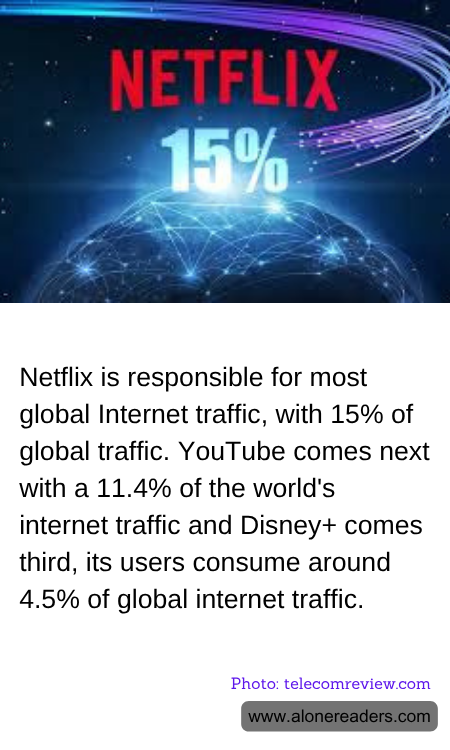
In the digital age, streaming services have become a cornerstone of entertainment, fundamentally altering how we consume media. Among these platforms, Netflix stands as a titan, responsible for a staggering 15% of global internet traffic. This dominance underscores the platform's widespread appeal and its ability to consistently deliver content that captivates audiences worldwide. With a vast library of movies, series, and documentaries, Netflix has not only revolutionized how we watch television but also how we interact with the internet itself.
Following closely behind Netflix is YouTube, which accounts for 11.4% of the world's internet traffic. As a platform that offers a diverse range of content—from educational videos and music to vlogs and live streams—YouTube's influence is undeniable. It serves as a hub for both creators and consumers, fostering a community where anyone can share their voice and creativity. The platform's accessibility and variety make it a go-to destination for users of all ages, contributing significantly to its substantial share of internet traffic.
In third place is Disney+, a relatively new player in the streaming arena, yet it has quickly carved out a significant niche with 4.5% of global internet traffic. Disney+ leverages its rich catalog of beloved franchises, including Marvel, Star Wars, and Pixar, to attract a broad audience. Its family-friendly content and nostalgic appeal have made it a favorite among households, further solidifying its position in the competitive streaming market.
The substantial internet traffic generated by these platforms highlights a broader trend in media consumption. As more people turn to streaming services for entertainment, traditional television and cable networks face increasing pressure to adapt. This shift is not just about convenience but also about the personalized experience that streaming services offer. Users can watch what they want, when they want, without the constraints of a fixed schedule.
Moreover, the impact of these platforms extends beyond entertainment. They influence cultural trends, shape public discourse, and even affect global internet infrastructure. The demand for high-quality streaming has driven advancements in technology, such as improved broadband speeds and more efficient data management, to accommodate the growing number of users.
In conclusion, the dominance of Netflix, YouTube, and Disney+ in global internet traffic is a testament to the changing landscape of media consumption. These platforms have not only transformed how we access content but also how we engage with the digital world. As they continue to evolve and expand, their influence on internet traffic and cultural dynamics is likely to grow, shaping the future of entertainment for generations to come.
