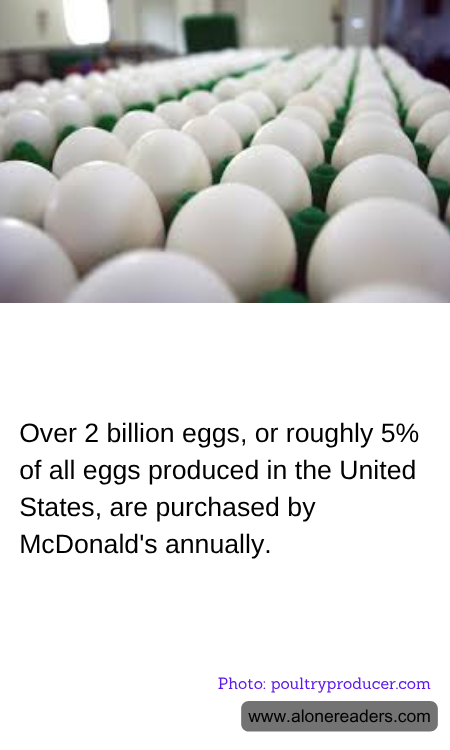
In the bustling world of fast food, McDonald's stands as a towering giant, not just in terms of its global presence but also in its staggering consumption of ingredients. Among these, eggs play a pivotal role, with the fast-food chain purchasing over 2 billion eggs annually. This figure represents roughly 5% of all eggs produced in the United States, underscoring the immense scale at which McDonald's operates and its significant impact on the egg industry.
Eggs are a cornerstone of McDonald's breakfast menu, which includes popular items like the Egg McMuffin, breakfast burritos, and various other sandwiches. The demand for these breakfast staples has only grown over the years, as more consumers seek convenient and satisfying morning meals. McDonald's commitment to serving breakfast all day in many locations has further cemented eggs as a crucial component of its offerings, driving up the need for this versatile ingredient.
The sheer volume of eggs required by McDonald's has implications beyond just the fast-food chain. It influences the entire supply chain, from farmers to distributors. To meet such high demand, McDonald's has established partnerships with numerous egg suppliers, ensuring a steady and reliable flow of eggs to its restaurants. This demand also encourages innovation and efficiency within the egg production industry, as suppliers strive to meet the quality and quantity standards set by one of their largest clients.
Moreover, McDonald's has taken steps to address consumer concerns about animal welfare and sustainability. The company has made commitments to source cage-free eggs, a move that reflects a broader trend in the food industry towards more humane and environmentally friendly practices. This transition not only aligns with consumer expectations but also sets a precedent for other companies to follow, potentially leading to widespread changes in egg production standards.
The impact of McDonald's egg consumption extends to economic and social dimensions as well. The company's purchasing power can influence egg prices and availability, affecting both producers and consumers. Additionally, McDonald's role as a major buyer can drive changes in industry practices, promoting advancements in food safety, quality, and sustainability.
In conclusion, McDonald's purchase of over 2 billion eggs annually is a testament to its influence in the food industry. This massive consumption highlights the company's role in shaping food production practices and its potential to drive positive change. As McDonald's continues to evolve its menu and sourcing strategies, its relationship with the egg industry will likely remain a focal point, reflecting broader trends and consumer preferences in the fast-food landscape.
