When we think of NASA, our minds often drift to images of astronauts floating in space, rockets launching into the cosmos, and the exploration of distant planets. However, NASA's influence extends far beyond the boundaries of space exploration. The agency's innovative spirit has led to the development of numerous technologies that have found their way into our everyday lives, revolutionizing the way we live and work.
One of the most ubiquitous examples of NASA's impact on daily life is the Dustbuster. Originally developed in the 1970s, this portable, cordless vacuum cleaner was a result of NASA's collaboration with Black & Decker to create a lightweight device for collecting lunar samples. Today, the Dustbuster is a household staple, making quick clean-ups a breeze and demonstrating how space-age technology can simplify mundane tasks.
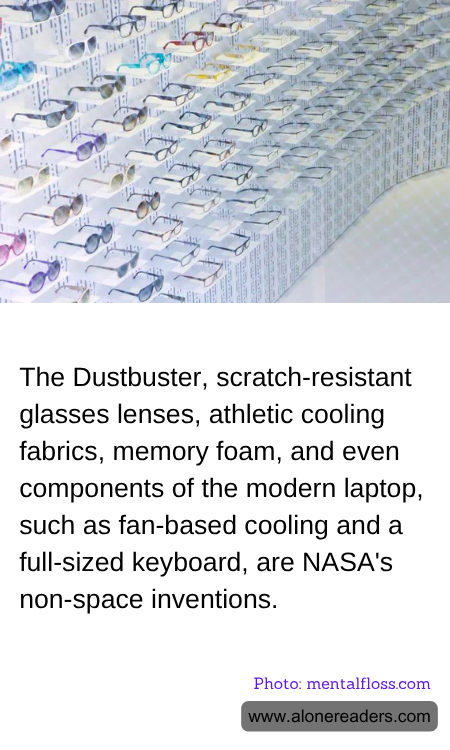
Another remarkable NASA-inspired innovation is the scratch-resistant lens. In the quest to create durable visors for astronauts' helmets, NASA developed a special coating that significantly reduces scratches. This technology was later adapted for use in everyday eyewear, providing millions of people with glasses that maintain clarity and longevity, even with frequent use.
Athletic cooling fabrics are another testament to NASA's ingenuity. Originally designed to regulate astronauts' body temperatures in space suits, these advanced textiles have been adapted for sportswear, helping athletes stay cool and comfortable during intense physical activity. This technology has become a game-changer in the world of sports, enhancing performance and comfort for both professional athletes and fitness enthusiasts.
Memory foam, a material known for its ability to conform to the shape of the body, was initially developed by NASA to improve seat cushioning and crash protection for aircraft. Today, memory foam is widely used in mattresses, pillows, and even footwear, providing unparalleled comfort and support. Its ability to distribute weight evenly and reduce pressure points has made it a popular choice for those seeking a better night's sleep.
Even components of the modern laptop, such as fan-based cooling systems and full-sized keyboards, owe their existence to NASA's pioneering work. The need to keep electronic equipment cool in the harsh environment of space led to the development of efficient cooling technologies, which have since been adapted for use in personal computers. Similarly, the design of full-sized keyboards was influenced by the need for astronauts to operate equipment with precision, even while wearing bulky gloves.
These examples highlight how NASA's non-space inventions have permeated various aspects of our daily lives, often in ways we might not immediately recognize. The agency's commitment to innovation and problem-solving continues to inspire advancements that benefit society as a whole. As we look to the future, it's exciting to imagine what other groundbreaking technologies might emerge from NASA's ongoing exploration of the unknown, further bridging the gap between space and everyday life.
