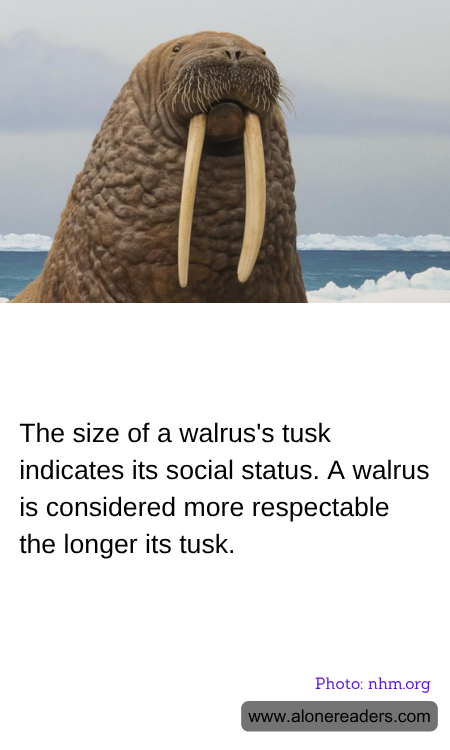
In the icy realms of the Arctic, where the sun barely dips below the horizon in summer and barely rises in winter, the walrus reigns as one of the most fascinating marine mammals. Known for their impressive size and distinctive tusks, walruses are not only a marvel of nature but also a subject of intrigue when it comes to their social dynamics. Among these blubbery giants, the length of a walrus's tusks plays a significant role in determining its social status, with longer tusks often equating to greater respect within their communities.
Tusks, which are elongated canine teeth, can grow up to three feet long in some walruses. Both male and female walruses possess these tusks, but they are particularly prominent in males. These impressive appendages serve multiple purposes, from aiding in mobility on ice to helping in foraging for food. However, beyond their practical uses, tusks are a symbol of power and prestige in the walrus world. Much like a crown on a king, the length of a walrus's tusks can signify its rank and influence among peers.
In the social hierarchy of walruses, longer tusks are often associated with dominance and maturity. Older, more experienced males typically have longer tusks, which they use to assert their authority and secure mating rights. During the breeding season, male walruses engage in displays of strength and prowess, where tusk length can be a decisive factor. These displays are not only about physical combat but also about showcasing one's genetic fitness, with longer tusks suggesting a healthier, more capable individual.
The respect garnered by longer tusks extends beyond the breeding season. In the tightly-knit groups known as herds, walruses with longer tusks often command more space and better access to resources. This social advantage can lead to improved survival prospects, as these individuals are better positioned to access food and resting areas. The social dynamics of walruses, therefore, revolve significantly around the visual and physical cues provided by tusk length, influencing interactions and relationships within the herd.
While the majestic tusks of walruses are a testament to their evolutionary success, they also highlight the delicate balance of nature. As climate change and human activities threaten their icy habitats, understanding the social structures of walruses becomes increasingly important. Conservation efforts must consider these social dynamics to ensure the survival of these remarkable creatures.
In conclusion, the tusks of a walrus are more than just impressive physical features; they are a key indicator of social status and respect within their communities. As symbols of strength and maturity, longer tusks play a crucial role in the complex social fabric of walrus herds, influencing everything from mating success to resource access. By appreciating the significance of these magnificent tusks, we gain a deeper understanding of the intricate lives of walruses and the importance of preserving their natural habitats.
