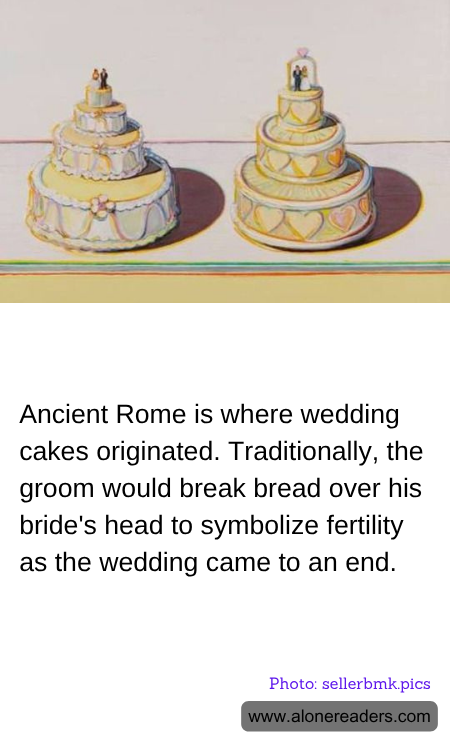
In the rich tapestry of wedding traditions, few customs are as universally recognized as the cutting of the wedding cake. However, the origins of this sweet centerpiece trace back to ancient Rome, where the tradition began not with cake, but with bread. This ancient ritual was steeped in symbolism, reflecting the values and beliefs of Roman society.
In ancient Rome, weddings were not just a union of two individuals but a significant social event that involved elaborate customs and rituals. One of the most intriguing traditions was the breaking of bread over the bride's head by the groom. This act was more than just a ceremonial gesture; it was a profound symbol of fertility and prosperity. The bread, often a simple barley loaf, represented the sustenance and abundance that the couple hoped to share in their married life. By breaking it over the bride's head, the groom was symbolically bestowing good fortune and fertility upon their union.
The crumbs from the broken bread were considered lucky, and guests would eagerly collect them, believing they would bring good fortune. This practice underscored the communal nature of Roman weddings, where the well-being of the couple was intertwined with that of their community. The breaking of bread was a public declaration of the couple's commitment to each other and their readiness to embrace the responsibilities of marriage.
As centuries passed, the tradition evolved. The simple barley loaf gave way to more elaborate confections, reflecting changes in culinary practices and societal values. By the Middle Ages, the custom had transformed into stacking small sweet buns in a tower, which the couple would attempt to kiss over. This practice eventually evolved into the tiered wedding cakes we recognize today, adorned with intricate decorations and often serving as a focal point of modern wedding celebrations.
Despite these changes, the essence of the tradition remains. The wedding cake continues to symbolize prosperity, fertility, and the sweet beginnings of a new life together. While the breaking of bread over the bride's head may have faded into history, its legacy endures in the joyous cutting of the cake, a moment that still captures the hopes and dreams of newlyweds around the world.
In reflecting on the origins of the wedding cake, we are reminded of the enduring power of tradition and the ways in which ancient customs continue to shape our celebrations. The story of the Roman bread-breaking ritual is a testament to the timeless nature of love and the universal desire for happiness and prosperity in marriage. As couples today partake in the ceremonial cutting of the cake, they are unknowingly participating in a tradition that spans millennia, connecting them to the rich history of matrimonial customs.
