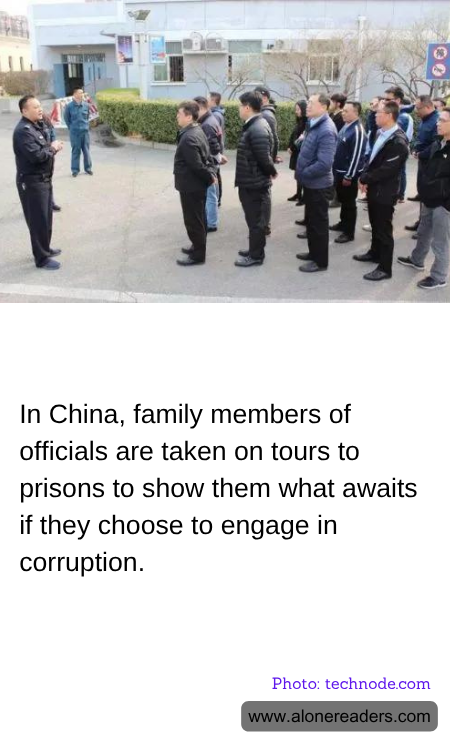
In recent years, China has intensified its efforts to combat corruption, a pervasive issue that has long plagued its political and economic landscape. One of the more unconventional methods employed in this anti-corruption campaign involves taking family members of government officials on tours of prisons. This initiative aims to serve as a stark reminder of the consequences that await those who choose to engage in corrupt activities.
The tours are part of a broader strategy to instill a culture of integrity and accountability among public servants and their families. By exposing them to the harsh realities of prison life, the government hopes to deter officials from succumbing to the temptations of bribery and embezzlement. The message is clear: corruption will not be tolerated, and those who engage in it will face severe repercussions.
These prison visits are designed to be sobering experiences. Family members are shown the living conditions of inmates, which are often cramped and austere. They hear firsthand accounts from former officials who have been convicted of corruption, providing a personal and impactful narrative of how their lives have been irrevocably altered by their actions. The emotional weight of these stories is intended to resonate deeply, not only with the officials themselves but also with their loved ones, who may serve as a moral compass and a source of accountability.
The initiative reflects the Chinese government's recognition that corruption is not just an individual failing but a societal issue that requires a collective response. By involving family members, the government seeks to create a support network that encourages ethical behavior and discourages illicit activities. This approach underscores the belief that the fight against corruption must extend beyond the confines of government offices and into the personal lives of those in power.
Critics, however, argue that while these tours may have a psychological impact, they are not a substitute for systemic reforms. They emphasize the need for greater transparency, independent oversight, and legal reforms to effectively tackle corruption. Nonetheless, the prison tours represent a unique and symbolic effort to address the issue from a cultural and familial perspective.
In conclusion, China's initiative to take family members of officials on prison tours is a testament to the country's commitment to eradicating corruption. By confronting officials and their families with the grim realities of prison life, the government hopes to foster a culture of integrity and deter corrupt practices. While the effectiveness of this approach remains a topic of debate, it highlights the multifaceted nature of the fight against corruption and the importance of involving all stakeholders in the pursuit of a more transparent and accountable society.
