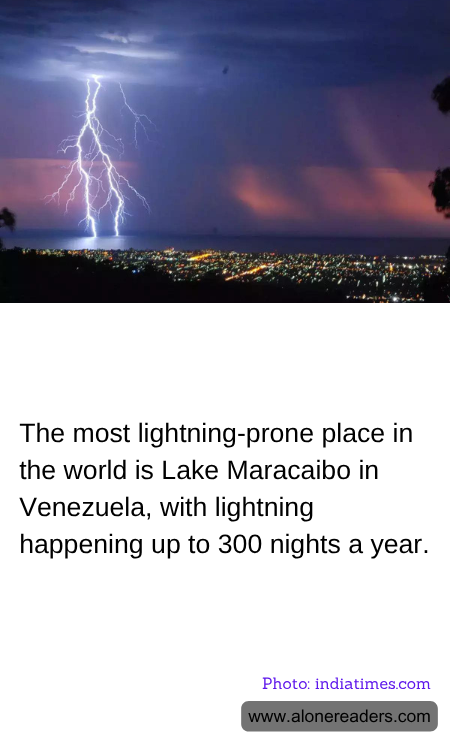
Lake Maracaibo in Venezuela holds a fascinating and electrifying record as the most lightning-prone place on Earth. This natural phenomenon, known as the Catatumbo Lightning, occurs up to 300 nights a year, illuminating the skies with its spectacular and relentless display. This unique meteorological event has intrigued scientists and captivated visitors, making it a subject of both scientific study and cultural folklore.
The lightning storms over Lake Maracaibo are a result of a perfect combination of geographical and atmospheric conditions. The lake is surrounded by the Andes Mountains, which create a natural wind tunnel. Warm, moist air from the Caribbean Sea collides with the cooler mountain air, creating the ideal conditions for thunderstorms. This interaction generates an average of 28 lightning strikes per minute during peak periods, producing a breathtaking spectacle that can be seen from miles away.
The Catatumbo Lightning is not only a natural wonder but also plays a crucial role in the environment. It is a significant source of atmospheric ozone, contributing to the replenishment of this vital layer that protects the Earth from harmful ultraviolet radiation. The consistent lightning activity also provides a unique opportunity for scientists to study the electrical and chemical processes of the atmosphere, offering insights into weather patterns and climate change.
For the local communities around Lake Maracaibo, the lightning is more than just a natural phenomenon; it is a part of their cultural identity. Stories and legends about the lightning have been passed down through generations, and it is often referred to as "the lighthouse of Maracaibo" due to its ability to guide sailors safely through the night. The lightning has also become a symbol of resilience and power, reflecting the spirit of the people who live in its shadow.
Tourism has grown around this natural wonder, attracting visitors from around the world eager to witness the awe-inspiring light show. Guided tours offer a safe and informative way to experience the lightning, providing insights into the science behind the phenomenon and its cultural significance. The best time to visit is during the rainy season, from April to November, when the lightning is most active.
Lake Maracaibo's lightning storms are a testament to the beauty and power of nature. They remind us of the delicate balance of environmental factors that create such extraordinary events. As scientists continue to study this phenomenon, it remains a source of wonder and inspiration, drawing people from all walks of life to witness the dazzling display of nature's electricity. Whether viewed as a scientific marvel or a cultural treasure, the lightning of Lake Maracaibo is a remarkable spectacle that continues to captivate the world.
