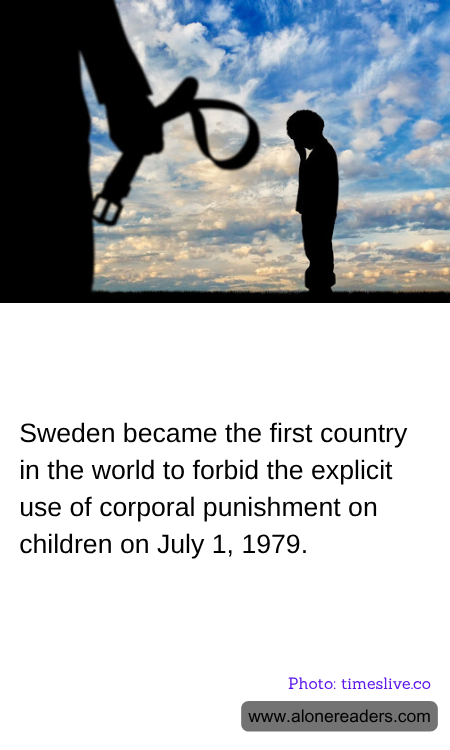
On July 1, 1979, Sweden made a groundbreaking move by becoming the first country in the world to explicitly ban corporal punishment of children. This landmark decision marked a significant shift in societal attitudes towards child-rearing and set a precedent for other nations to follow. The Swedish law aimed to protect children from physical harm and promote a more nurturing and respectful approach to parenting.
The decision to outlaw corporal punishment was not made overnight. It was the result of years of advocacy and a growing understanding of children's rights. In the decades leading up to the ban, Sweden had already taken steps to reduce the use of physical discipline. The country had a strong tradition of social welfare and human rights, which laid the groundwork for this progressive legislation. The law was not just about prohibiting physical punishment but also about changing the cultural norms surrounding child discipline.
The introduction of the ban was met with mixed reactions. Some critics argued that it interfered with parental rights and traditional methods of discipline. However, supporters of the law emphasized the importance of protecting children from violence and promoting their well-being. They argued that physical punishment could lead to negative outcomes, such as increased aggression and mental health issues in children. The Swedish government, along with child welfare organizations, launched extensive public education campaigns to raise awareness about the benefits of non-violent parenting techniques.
Since the implementation of the ban, Sweden has seen a significant cultural shift in how children are disciplined. The law has been credited with reducing the incidence of child abuse and fostering a more positive environment for children to grow up in. It has also inspired other countries to reconsider their own laws regarding corporal punishment. Today, more than 60 countries have followed Sweden's lead and enacted similar bans, reflecting a global trend towards protecting children's rights.
The Swedish model has shown that legal measures, combined with public education and support for parents, can effectively change societal attitudes and practices. By prioritizing the well-being of children and promoting non-violent forms of discipline, Sweden has set an example for the world. The 1979 ban on corporal punishment was not just a legal change; it was a statement about the kind of society Sweden aspired to be—one that values the rights and dignity of every child.
In conclusion, Sweden's decision to ban corporal punishment in 1979 was a pioneering step in the global movement towards recognizing and upholding children's rights. It demonstrated that legal frameworks, when supported by public awareness and education, can lead to meaningful social change. As more countries adopt similar measures, the legacy of Sweden's bold move continues to influence and inspire efforts to create safer and more nurturing environments for children worldwide.
