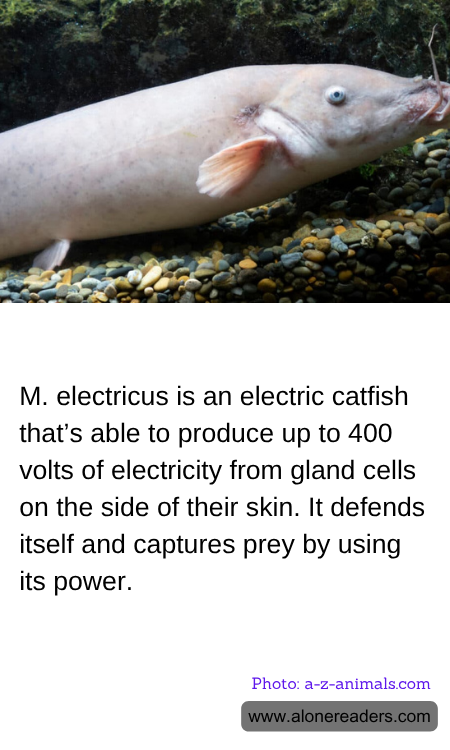
The fascinating world of aquatic life is filled with creatures that possess extraordinary abilities, and among them is the M. electricus, commonly known as the electric catfish. This remarkable species is native to the freshwater rivers and lakes of Africa, where it has carved out a niche for itself as both a formidable predator and a master of defense. What sets the electric catfish apart from its aquatic counterparts is its unique ability to generate electricity, a trait that has intrigued scientists and nature enthusiasts alike.
M. electricus is capable of producing up to 400 volts of electricity, a feat achieved through specialized gland cells located on the sides of its skin. These cells, known as electrocytes, function much like tiny batteries, storing and releasing electrical energy when needed. This electric discharge serves multiple purposes, primarily as a means of self-defense and as a tool for hunting prey. When threatened, the electric catfish can unleash a powerful shock to deter potential predators, ensuring its survival in the often perilous underwater environment.
In addition to its defensive capabilities, the electric catfish uses its electrical prowess to capture prey. The waters it inhabits are often murky, making visibility a challenge. However, the electric catfish has turned this to its advantage. By emitting electric pulses, it can stun or disorient its prey, making it easier to catch. This method of hunting is not only efficient but also allows the catfish to detect and locate prey even in the darkest and most cluttered aquatic habitats.
The electric catfish's ability to generate electricity has also piqued the interest of researchers, who study this phenomenon to gain insights into bioelectricity and its potential applications. Understanding how these fish produce and control electric discharges could lead to advancements in technology and medicine, such as the development of new types of batteries or medical devices that mimic the natural processes of these aquatic creatures.
Despite its formidable capabilities, the electric catfish is not aggressive towards humans and poses little threat unless provoked. Its primary focus remains on survival and sustenance within its natural habitat. As we continue to explore the depths of our planet's waters, the electric catfish stands as a testament to the incredible adaptability and ingenuity of life on Earth. Its ability to harness electricity not only highlights the wonders of evolution but also serves as a reminder of the untapped potential that lies within the natural world.
