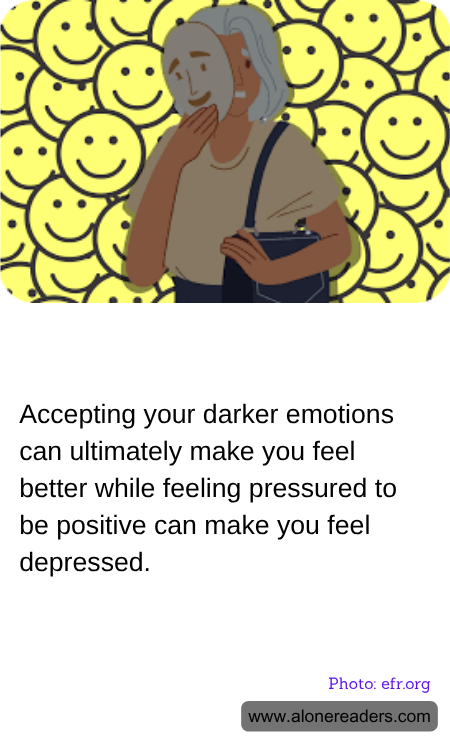
In today's world, where social media often showcases a highlight reel of perfect lives, there is an increasing pressure to maintain a positive outlook at all times. This relentless pursuit of happiness can sometimes lead to the suppression of our darker emotions, such as sadness, anger, or fear. However, acknowledging and accepting these emotions can ultimately lead to a healthier mental state, while the pressure to remain perpetually positive can ironically contribute to feelings of depression.
Emotions are a fundamental part of the human experience, and they serve as important signals that guide us through life. Negative emotions, in particular, can be valuable indicators of underlying issues that need attention. For instance, feeling sad might prompt us to reflect on a loss or change that requires processing, while anger might highlight a boundary that has been crossed. By acknowledging these emotions, we allow ourselves the opportunity to understand and address the root causes, leading to personal growth and emotional resilience.
Conversely, the societal expectation to always appear cheerful can be detrimental. This phenomenon, often referred to as "toxic positivity," dismisses the complexity of human emotions and can invalidate genuine feelings. When individuals feel pressured to suppress their true emotions in favor of a facade of happiness, it can lead to a sense of isolation and inauthenticity. Over time, this can exacerbate feelings of depression, as the unresolved emotions fester beneath the surface.
Embracing our darker emotions does not mean wallowing in them indefinitely. Rather, it involves recognizing them as a natural part of life and allowing ourselves the space to experience them fully. This process can be cathartic and healing, providing a sense of relief and clarity. It also fosters self-compassion, as we learn to accept ourselves in our entirety, rather than only the parts that are deemed socially acceptable.
Moreover, sharing these emotions with trusted friends, family, or mental health professionals can be incredibly liberating. It creates a supportive environment where vulnerability is met with empathy and understanding, rather than judgment. This connection can alleviate the burden of carrying these emotions alone and can lead to deeper, more meaningful relationships.
In conclusion, while the desire to maintain a positive outlook is understandable, it is crucial to recognize the value of our darker emotions. By accepting and processing these feelings, we can achieve a more balanced and authentic emotional life. This acceptance not only enhances our mental well-being but also empowers us to navigate life's challenges with greater resilience and self-awareness. Ultimately, embracing the full spectrum of our emotions allows us to live more genuinely and fully, leading to a more fulfilling and enriched life.
