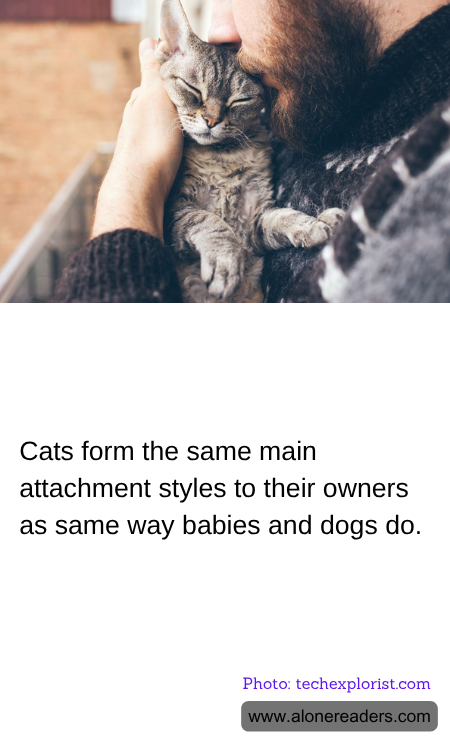
In recent years, the understanding of feline behavior has evolved significantly, revealing that cats, much like babies and dogs, form distinct attachment styles with their human companions. This discovery challenges the long-held stereotype of cats as aloof and independent creatures, highlighting their capacity for emotional bonds and social interaction.
Research into feline attachment styles has shown that cats can develop secure, ambivalent, avoidant, or disorganized attachments to their owners. These styles are remarkably similar to those observed in human infants and dogs. A secure attachment is characterized by a cat feeling safe and comfortable in the presence of their owner, often seeking them out for comfort and affection. Cats with secure attachments tend to be more sociable and confident, exploring their environment with ease, knowing they have a reliable source of support.
Conversely, cats with ambivalent attachments may exhibit clingy behavior, showing signs of distress when their owner is absent and remaining anxious even upon their return. Avoidant cats, on the other hand, might appear indifferent, avoiding interaction and maintaining a distance from their owners. Disorganized attachment, though less common, can manifest as unpredictable behavior, with the cat displaying a mix of anxiety and avoidance.
Understanding these attachment styles is crucial for cat owners, as it can significantly impact the well-being of their feline friends. Recognizing a cat's attachment style can help owners tailor their interactions to meet their pet's emotional needs, fostering a more harmonious relationship. For instance, a cat with a secure attachment may thrive with regular playtime and affection, while an ambivalent cat might benefit from consistent routines and reassurance.
The implications of these findings extend beyond individual pet-owner relationships, offering insights into the broader social dynamics of cats. By acknowledging the emotional depth of cats, we can better appreciate their role in our lives and the importance of nurturing their social and emotional needs. This understanding can also inform practices in animal shelters and veterinary care, where recognizing and addressing attachment styles can improve the welfare and adoptability of cats.
In conclusion, the revelation that cats form attachment styles akin to those of babies and dogs underscores the complexity of their emotional lives. By embracing this knowledge, cat owners can deepen their bonds with their pets, ensuring that these enigmatic creatures receive the love and support they need to thrive. As our understanding of feline behavior continues to grow, so too does our capacity to enrich the lives of these beloved companions.
