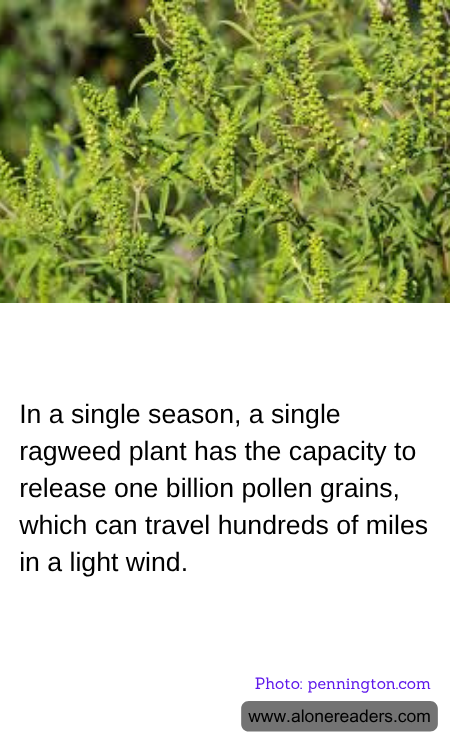
Ragweed, a seemingly innocuous plant, holds a remarkable and somewhat daunting capability within its small stature. In a single season, a single ragweed plant can release up to one billion pollen grains. This astonishing number underscores the plant's prolific nature and its significant impact on both the environment and human health.
The sheer volume of pollen produced by ragweed is a testament to its evolutionary success. These tiny grains, almost invisible to the naked eye, are designed to travel vast distances. Carried by even the lightest of winds, ragweed pollen can journey hundreds of miles from its origin. This ability to disperse widely ensures that ragweed can colonize new areas, contributing to its status as a pervasive and often troublesome weed.
For many people, ragweed pollen is more than just a botanical curiosity; it is a source of seasonal misery. Ragweed is a leading cause of hay fever, a condition that affects millions of individuals worldwide. Symptoms such as sneezing, itchy eyes, and runny noses are all too familiar to those who suffer from pollen allergies. The widespread distribution of ragweed pollen means that even those living far from the plant's immediate vicinity can experience its effects, as the grains are carried by the wind across regions and even countries.
The impact of ragweed pollen is not limited to human health. Its ability to spread over large areas can disrupt local ecosystems. Ragweed often thrives in disturbed soils, such as those found in urban areas, roadsides, and agricultural lands. Once established, it can outcompete native plants, reducing biodiversity and altering habitats. This aggressive growth pattern makes ragweed a challenging plant to manage, requiring concerted efforts to control its spread and mitigate its impact.
Efforts to manage ragweed and its pollen are ongoing, with strategies ranging from public awareness campaigns to scientific research aimed at understanding its biology and ecology. For individuals affected by ragweed pollen, staying informed about pollen forecasts and taking preventive measures can help alleviate symptoms. Simple actions, such as keeping windows closed during peak pollen times and using air purifiers, can make a significant difference in managing hay fever.
In conclusion, the ragweed plant, with its capacity to release one billion pollen grains in a single season, is a powerful reminder of nature's ability to adapt and thrive. While its prolific pollen production poses challenges, understanding and managing its impact can help mitigate its effects on both human health and the environment. As we continue to learn more about this resilient plant, we can better prepare for and respond to the challenges it presents.
