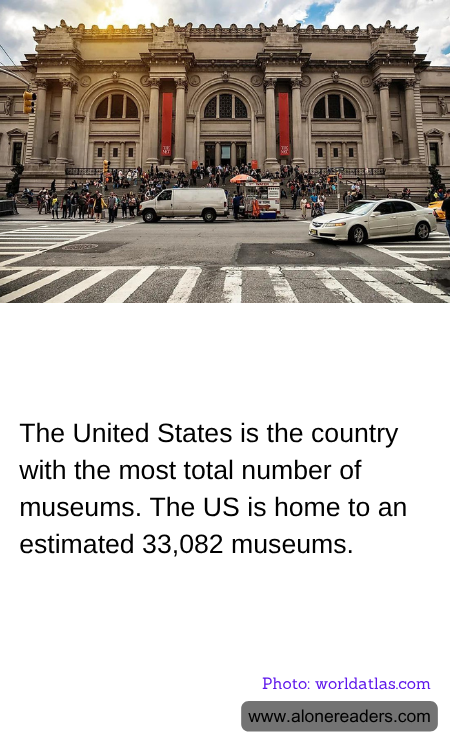
The United States, a nation renowned for its cultural diversity and rich history, holds the distinction of being home to the most museums in the world, with an estimated 33,082 institutions scattered across its vast landscape. These museums serve as vital cultural and educational resources, offering insights into a wide array of subjects, from art and history to science and technology. They play a crucial role in preserving the nation's heritage, fostering a sense of community, and providing educational opportunities for people of all ages.
Museums in the United States are as varied as the country itself. They range from world-famous institutions like the Smithsonian in Washington, D.C., and the Metropolitan Museum of Art in New York City, to smaller, specialized museums that focus on niche topics such as the history of a local community or the life of a particular artist. This diversity allows visitors to explore a multitude of interests and discover new passions. Whether it's the awe-inspiring dinosaur skeletons at the American Museum of Natural History or the thought-provoking contemporary art at the Museum of Modern Art, there is something for everyone.
The abundance of museums in the United States reflects the country's commitment to education and cultural preservation. Many museums offer interactive exhibits and educational programs designed to engage young minds and inspire lifelong learning. These programs often include workshops, lectures, and hands-on activities that make learning fun and accessible. Museums also serve as community hubs, hosting events and exhibitions that bring people together and encourage dialogue about important social and cultural issues.
Furthermore, museums contribute significantly to the economy by attracting millions of tourists each year. They generate revenue not only through ticket sales but also by boosting local businesses such as hotels, restaurants, and shops. This economic impact underscores the importance of supporting and maintaining these institutions, ensuring they continue to thrive and enrich communities across the nation.
In addition to their educational and economic contributions, museums in the United States play a vital role in fostering a sense of identity and belonging. They provide a space where people can connect with their heritage, explore different cultures, and gain a deeper understanding of the world around them. By preserving and showcasing artifacts, artworks, and historical documents, museums help to keep the stories of the past alive for future generations.
In conclusion, the United States' status as the country with the most museums is a testament to its dedication to cultural enrichment and education. These institutions not only preserve the nation's history and heritage but also inspire curiosity and creativity in visitors of all ages. As centers of learning and community engagement, museums are invaluable assets that continue to shape the cultural landscape of the United States.
