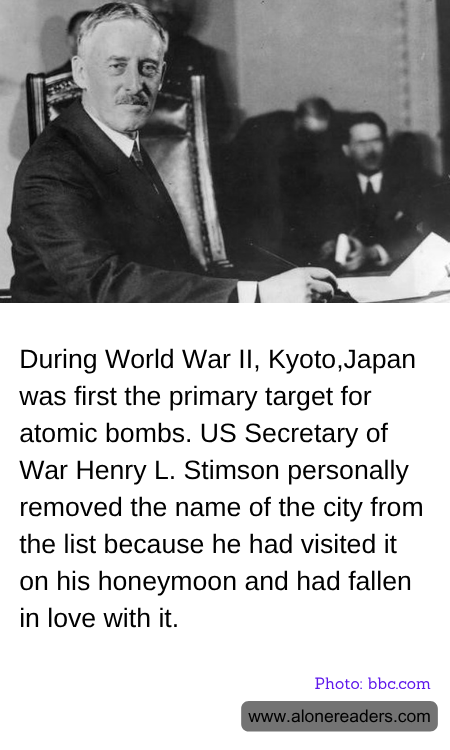
During World War II, the United States faced the daunting decision of selecting targets for the atomic bomb, a weapon of unprecedented destructive power. Among the cities considered was Kyoto, Japan, a city renowned for its cultural and historical significance. Initially, Kyoto was at the top of the list of potential targets due to its industrial capacity and its role as a hub for military communications. However, a personal intervention by the then US Secretary of War, Henry L. Stimson, led to its removal from this devastating fate.
Henry L. Stimson, a seasoned statesman with a deep appreciation for history and culture, had visited Kyoto during his honeymoon. The city, with its serene temples, lush gardens, and rich cultural heritage, left a lasting impression on him. Stimson's personal connection to Kyoto played a pivotal role in his decision to advocate for its removal from the list of atomic bomb targets. He argued that the destruction of such a culturally significant city would not only be a loss to Japan but to the world at large. His intervention was instrumental in preserving Kyoto's historical treasures and cultural legacy.
The decision to spare Kyoto was not without controversy. Military advisors and strategists were focused on the strategic advantages of targeting cities that would cripple Japan's ability to continue the war. However, Stimson's insistence on preserving Kyoto's cultural heritage highlighted a different perspective, one that valued the preservation of human history and culture even amidst the horrors of war. This decision underscored the complex moral and ethical considerations involved in wartime strategy.
Ultimately, the atomic bombs were dropped on Hiroshima and Nagasaki, leading to Japan's surrender and the end of World War II. The sparing of Kyoto allowed it to remain a vibrant center of Japanese culture and history, a city that continues to attract millions of visitors from around the world. Today, Kyoto stands as a testament to the importance of preserving cultural heritage, even in times of conflict. It serves as a reminder of the profound impact that individual decisions can have on the course of history.
Stimson's decision to remove Kyoto from the list of atomic bomb targets is a poignant example of how personal experiences and values can influence critical decisions. It highlights the importance of considering the broader implications of military actions and the need to balance strategic objectives with the preservation of cultural and historical legacies. As we reflect on the events of World War II, the story of Kyoto serves as a powerful reminder of the enduring value of cultural preservation and the role of empathy and understanding in shaping our world.
