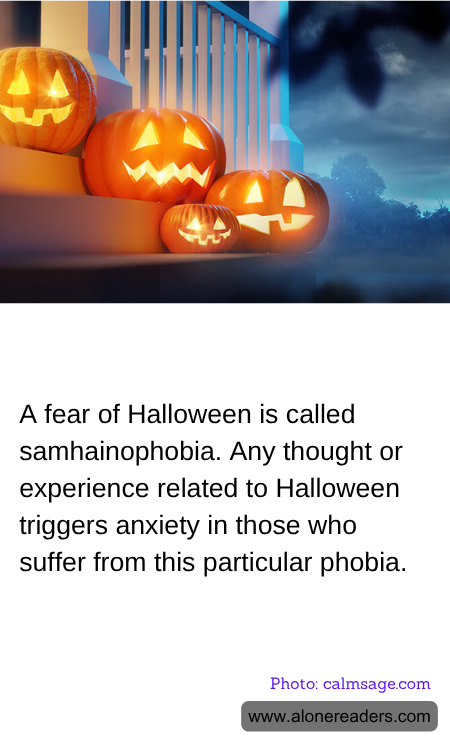
Halloween, a holiday celebrated with costumes, candy, and spooky decorations, is eagerly anticipated by many. However, for some individuals, the mere thought of Halloween can trigger intense anxiety and fear. This condition is known as samhainophobia, a specific phobia that causes distress related to Halloween and its associated elements.
Samhainophobia derives its name from Samhain, an ancient Celtic festival that marked the end of the harvest season and the beginning of winter. This festival is considered a precursor to modern Halloween celebrations. For those with samhainophobia, the fear is not just about the holiday itself but extends to any symbols or activities associated with it, such as ghosts, witches, and haunted houses. The anxiety can be so overwhelming that it disrupts daily life, making it difficult for sufferers to function normally during the Halloween season.
The symptoms of samhainophobia can vary from person to person. Some may experience mild anxiety, while others may have severe panic attacks. Common symptoms include sweating, trembling, rapid heartbeat, and a feeling of dread. These reactions can be triggered by Halloween decorations, costumes, or even conversations about the holiday. In some cases, individuals may go to great lengths to avoid any exposure to Halloween-related stimuli, which can lead to social isolation and a significant impact on their quality of life.
Understanding the root causes of samhainophobia can be complex. Like many phobias, it may stem from a traumatic experience related to Halloween, such as a frightening encounter during childhood. It could also be influenced by cultural or familial attitudes towards the holiday. Additionally, individuals with a predisposition to anxiety disorders may be more susceptible to developing specific phobias, including samhainophobia.
Treatment for samhainophobia often involves a combination of therapy and coping strategies. Cognitive-behavioral therapy (CBT) is commonly used to help individuals challenge and change their negative thought patterns related to Halloween. Exposure therapy, a technique that involves gradual and controlled exposure to the feared stimuli, can also be effective in reducing anxiety. For some, medication may be prescribed to manage severe symptoms. Support from friends and family is crucial, as understanding and empathy can help alleviate the feelings of isolation that often accompany phobias.
Raising awareness about samhainophobia is important, as it helps to foster a more inclusive environment for those affected by this condition. By acknowledging that not everyone shares the same enthusiasm for Halloween, communities can create spaces where individuals with samhainophobia feel safe and respected. Whether it's through offering alternative activities or simply being mindful of others' feelings, small gestures can make a significant difference.
In a world that often celebrates the spooky and the supernatural, it's essential to remember that fear is a deeply personal experience. For those with samhainophobia, Halloween is not a time of fun and excitement but a period of genuine distress. By understanding and supporting those who face this unique challenge, we can ensure that the spirit of Halloween remains inclusive and enjoyable for everyone.
