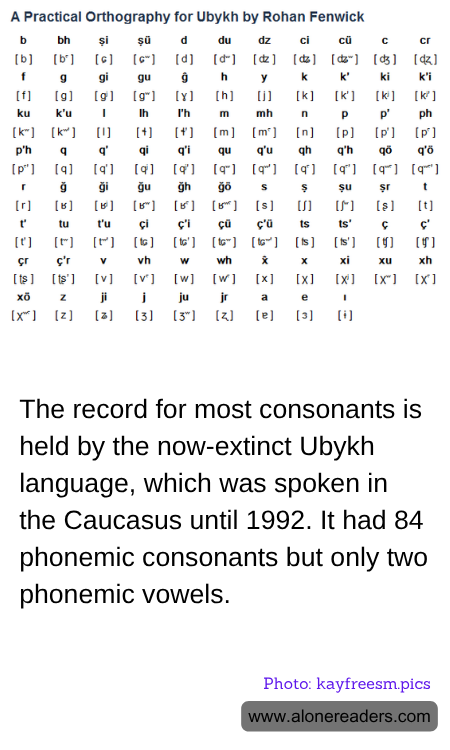
In the rich tapestry of human languages, the Ubykh language stands out as a remarkable example of linguistic diversity and complexity. Spoken in the Caucasus region until its extinction in 1992, Ubykh holds the record for the most consonants in any known language, boasting an astonishing 84 phonemic consonants. This linguistic feature makes Ubykh a fascinating subject of study for linguists and language enthusiasts alike.
The Ubykh language was once spoken by the Ubykh people, who lived in the area now known as modern-day Turkey, near the eastern coast of the Black Sea. Despite its extinction, the language continues to intrigue researchers due to its unique phonetic structure. While most languages balance their phonemic inventory between vowels and consonants, Ubykh took a different path. It had only two phonemic vowels, a stark contrast to its extensive array of consonants. This unusual distribution of sounds challenges conventional linguistic norms and offers insights into the diverse ways human languages can evolve.
The consonant-heavy nature of Ubykh can be attributed to its complex system of ejective and fricative sounds, which are not commonly found in many other languages. These sounds require precise articulation and control, reflecting the intricate nature of Ubykh phonetics. The language's consonantal richness allowed speakers to convey nuanced meanings and subtle distinctions in speech, a testament to the adaptability and creativity inherent in human communication.
Despite its extinction, the legacy of the Ubykh language lives on through the efforts of linguists who have meticulously documented its features. The last known fluent speaker, Tevfik Esenç, worked closely with researchers to preserve the language's sounds and structure. Thanks to these efforts, recordings and written records of Ubykh provide valuable resources for understanding its unique characteristics and contribute to the broader study of endangered and extinct languages.
The story of Ubykh serves as a poignant reminder of the fragility of linguistic diversity. As globalization and cultural assimilation continue to threaten minority languages worldwide, the extinction of Ubykh underscores the importance of preserving linguistic heritage. Each language, with its distinct sounds and structures, offers a window into the culture and history of its speakers. The loss of a language like Ubykh represents not only the disappearance of a mode of communication but also the erosion of cultural identity and knowledge.
In conclusion, the Ubykh language's record for the most consonants highlights the incredible diversity of human languages. Its unique phonetic structure challenges our understanding of linguistic norms and serves as a valuable case study for researchers. While Ubykh may no longer be spoken, its legacy endures, reminding us of the importance of preserving and celebrating the world's linguistic heritage.
