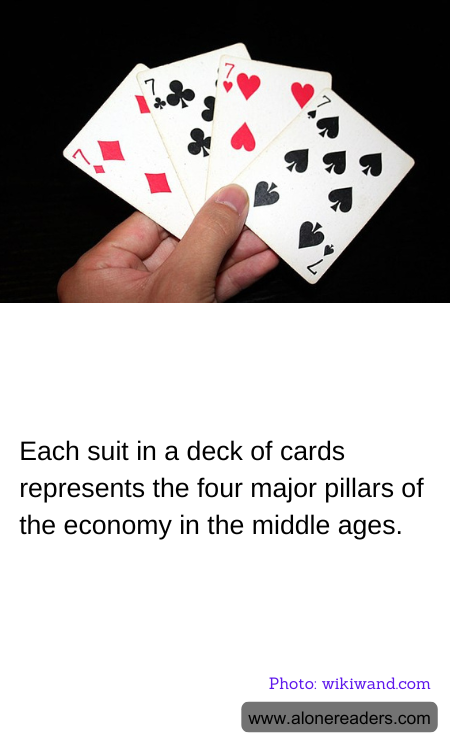
In the world of playing cards, each suit carries a rich tapestry of symbolism and history. While today they are often associated with games and entertainment, the suits in a deck of cards have roots that stretch back to the Middle Ages, where they were thought to represent the four major pillars of the economy during that era: hearts, diamonds, clubs, and spades.
The suit of hearts is often associated with the clergy, a powerful and influential pillar of medieval society. The church was not only a spiritual guide but also a significant economic force. It owned vast tracts of land and collected tithes from the populace, which were used to maintain its operations and support the community. The heart symbolizes the moral and ethical guidance provided by the church, as well as its role in shaping the social fabric of the time.
Diamonds, on the other hand, are linked to the merchant class. This suit represents wealth, trade, and the burgeoning economy that was driven by commerce. During the Middle Ages, merchants were instrumental in the exchange of goods, ideas, and culture across regions. They were the lifeblood of economic growth, facilitating trade routes that connected distant lands. The diamond suit captures the essence of prosperity and the importance of trade in sustaining and expanding the medieval economy.
Clubs are emblematic of the peasantry and agriculture, the backbone of the medieval economy. The majority of the population during this time were peasants who worked the land, producing the food and raw materials necessary for survival and trade. Agriculture was the foundation upon which all other economic activities were built. The club suit, with its earthy connotations, symbolizes the hard work and resilience of the peasant class, whose labor was essential for the sustenance of society.
Lastly, the suit of spades is associated with the nobility and the military. The spade, resembling a spear or a sword, represents the power and protection provided by the ruling class. Nobles were responsible for maintaining order and defending their territories, often through military might. They played a crucial role in the governance and stability of the realm, ensuring that the economic activities of the other classes could continue without disruption. The spade suit thus embodies authority, strength, and the protective role of the nobility.
Together, these four suits offer a fascinating glimpse into the economic structure of the Middle Ages. They reflect the interconnectedness of different societal roles and how each contributed to the overall functioning and prosperity of the time. While the symbolism of card suits has evolved over the centuries, their historical associations with the pillars of medieval economy remain a testament to the enduring legacy of this period in shaping the world we know today.
