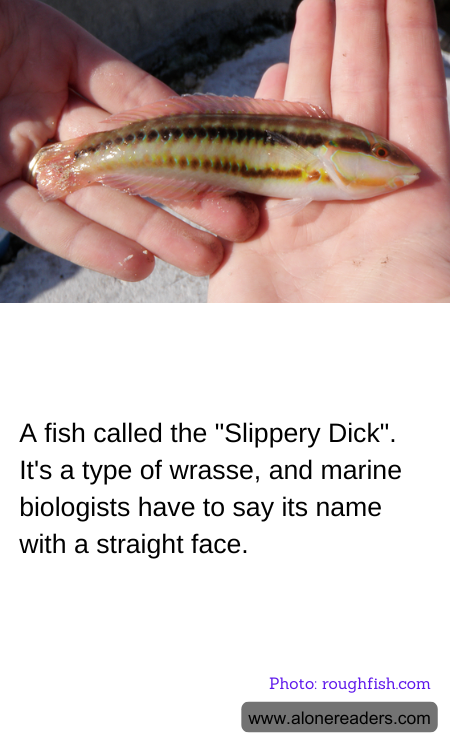
In the vibrant tapestry of marine life, few creatures boast a name as peculiar and amusing as the "Slippery Dick." This intriguing fish, a member of the wrasse family, is not only a subject of scientific interest but also a source of lighthearted amusement due to its unusual moniker. Despite its humorous name, the Slippery Dick plays a significant role in its ecosystem and offers fascinating insights into the world of marine biology.
The Slippery Dick, scientifically known as Halichoeres bivittatus, is a small, colorful fish commonly found in the warm waters of the western Atlantic Ocean, ranging from North Carolina to Brazil. It is particularly abundant around coral reefs and seagrass beds, where it thrives in the vibrant underwater landscapes. The fish is easily recognizable by its elongated body, which is adorned with striking patterns of green, yellow, and blue hues. These vivid colors not only make it a visual delight but also serve as a form of camouflage among the corals and seaweeds.
Marine biologists, who often have to discuss the Slippery Dick in their research and presentations, have learned to mention its name with a straight face, despite the inevitable chuckles it may provoke. The name "Slippery Dick" is believed to have originated from the fish's slippery texture and its ability to swiftly dart away from predators and curious divers alike. This agility is a crucial survival trait, allowing it to evade capture and maintain its role in the delicate balance of the reef ecosystem.
Beyond its amusing name, the Slippery Dick is an important species for scientific study. Like many wrasses, it exhibits fascinating behaviors, such as sex change. These fish are protogynous hermaphrodites, meaning they can change from female to male as they mature. This ability to switch sexes is a remarkable adaptation that helps maintain population stability and ensures successful reproduction within their communities.
The Slippery Dick also contributes to the health of coral reefs by controlling the population of small invertebrates, which it feeds on. By keeping these populations in check, the Slippery Dick helps prevent overgrazing of algae and other organisms that can harm coral reefs. This ecological role underscores the importance of preserving such species and their habitats, as they are integral to the overall health of marine ecosystems.
While the name "Slippery Dick" may elicit a smile or two, it is essential to appreciate the fish beyond its humorous label. It serves as a reminder of the diversity and wonder of marine life, as well as the importance of scientific research in understanding and protecting our oceans. As marine biologists continue to study this fascinating fish, they do so with a sense of respect and curiosity, recognizing the Slippery Dick as a vital component of the underwater world.
