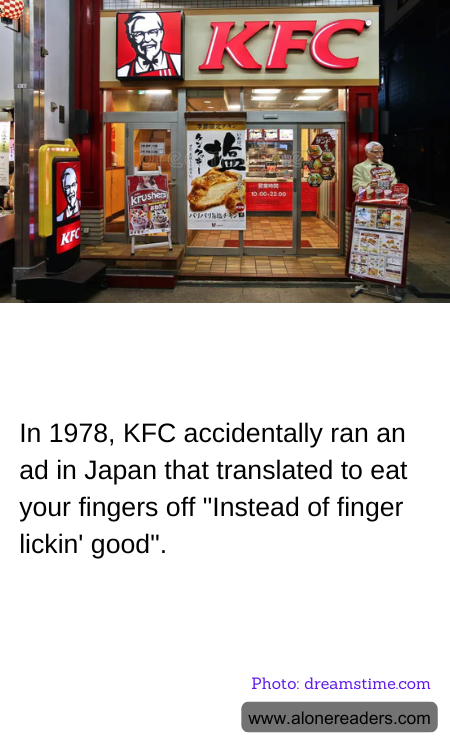
In the world of global marketing, cultural nuances and language barriers can sometimes lead to amusing and unexpected outcomes. One such incident occurred in 1978 when Kentucky Fried Chicken (KFC) made its foray into the Japanese market. The fast-food giant, known for its catchy slogan "Finger Lickin' Good," faced an unexpected challenge when its advertising campaign was translated into Japanese. The translation mishap resulted in the slogan being interpreted as "Eat your fingers off," a phrase that understandably left Japanese consumers puzzled and amused.
The error stemmed from the complexities of translating idiomatic expressions across languages. While "Finger Lickin' Good" is a playful and appetizing phrase in English, suggesting that the food is so delicious that one would lick their fingers clean, the literal translation into Japanese lost its intended meaning. Instead, it conjured an image that was both bizarre and unappetizing. This incident highlights the importance of cultural sensitivity and the need for careful localization in international marketing.
Despite the initial hiccup, KFC's entry into the Japanese market was ultimately successful. The company quickly addressed the translation error and worked to adapt its marketing strategies to better resonate with Japanese consumers. This included not only correcting the slogan but also tailoring its menu and advertising campaigns to align with local tastes and preferences. Over time, KFC became a popular fast-food choice in Japan, known for its unique offerings such as the Christmas fried chicken tradition, which has become a beloved holiday custom in the country.
The 1978 translation blunder serves as a valuable lesson for businesses looking to expand globally. It underscores the importance of understanding cultural differences and the potential pitfalls of direct translations. Companies must invest in thorough market research and collaborate with local experts to ensure that their brand messages are conveyed accurately and effectively. By doing so, they can avoid misunderstandings and build strong connections with consumers in diverse regions.
In retrospect, the "Eat your fingers off" incident is a humorous reminder of the challenges and opportunities that come with global marketing. It illustrates how a simple translation error can capture public attention and become a part of a brand's history. For KFC, it was a momentary setback that ultimately contributed to the company's growth and adaptation in the Japanese market. Today, KFC's story in Japan is not just about a translation mistake but also about resilience, learning, and the ability to turn a potential faux pas into a stepping stone for success.
