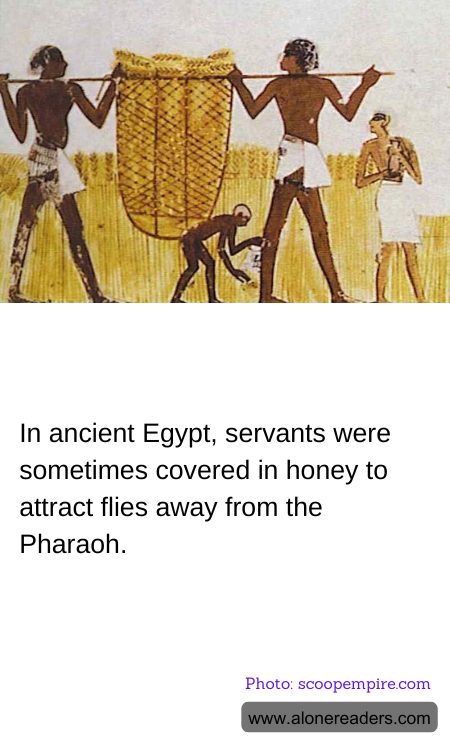
In the annals of ancient Egyptian history, the Pharaohs were revered as living gods, their lives shrouded in opulence and mystery. Among the many fascinating aspects of their existence, one peculiar practice stands out: the use of honey-covered servants to keep flies away from the Pharaoh. This intriguing custom not only highlights the lengths to which the Egyptians went to ensure the comfort of their rulers but also offers a glimpse into the daily life and societal norms of ancient Egypt.
The ancient Egyptians held honey in high regard, not only for its sweetness but also for its preservative and medicinal properties. It was considered a luxury item, often used in religious rituals and as an offering to the gods. However, its use as a fly deterrent for Pharaohs underscores the unique and sometimes extreme measures taken to maintain the sanctity and comfort of the royal court. In a land where the Nile's fertile banks teemed with life, flies were an inevitable nuisance, and the Egyptians, with their keen sense of innovation, devised this unusual method to protect their divine rulers.
The practice involved covering a servant in honey, effectively turning them into a living flytrap. This would draw the flies away from the Pharaoh, allowing him to conduct his affairs in peace. While this might seem like an extreme measure by modern standards, it reflects the hierarchical nature of ancient Egyptian society, where the Pharaoh's well-being was paramount. Servants, often seen as extensions of the Pharaoh's will, were expected to perform their duties without question, even if it meant enduring discomfort for the sake of their ruler's comfort.
This practice also sheds light on the broader cultural and religious beliefs of ancient Egypt. The Pharaoh was not just a political leader but a divine figure, believed to be the earthly embodiment of the gods. As such, his comfort and protection were of utmost importance, and any means to ensure this were deemed necessary and justified. The use of honey-covered servants is a testament to the lengths the Egyptians would go to uphold the divine status of their ruler.
In modern times, this practice might seem bizarre or even inhumane, but it serves as a reminder of the vastly different cultural norms and values that have existed throughout history. It highlights the ingenuity and resourcefulness of ancient civilizations in addressing everyday challenges, as well as the complex social structures that defined their way of life. As we continue to explore and understand the rich tapestry of human history, such practices offer valuable insights into the lives and beliefs of those who came before us, reminding us of the diverse and ever-evolving nature of human society.
