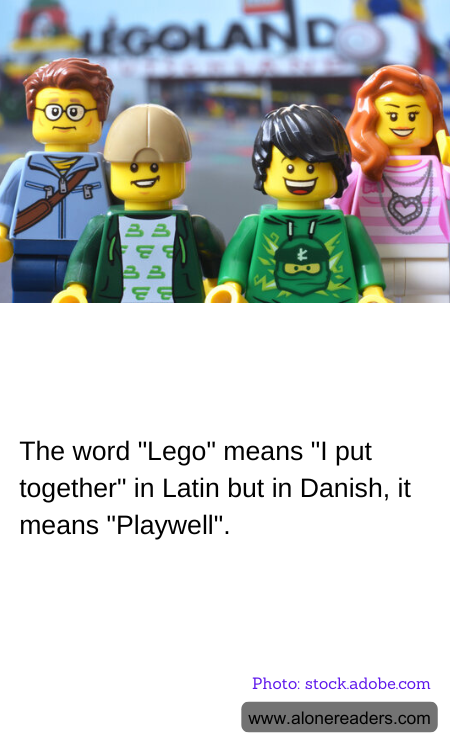
The word "Lego" is a fascinating example of how language can bridge cultures and convey different meanings. In Latin, "Lego" translates to "I put together," a fitting description for the iconic building blocks that have sparked creativity and innovation in children and adults alike for decades. This translation captures the essence of the Lego experience: the act of assembling individual pieces to create something new and unique. It reflects the fundamental human desire to build, construct, and bring ideas to life, a concept that resonates universally.
However, the story of Lego doesn't end with its Latin roots. In Danish, the word "Lego" takes on a different, yet equally meaningful interpretation: "Playwell." This translation is derived from the Danish phrase "leg godt," which directly translates to "play well." This meaning underscores the company's philosophy and mission to inspire play and learning through its products. The notion of playing well is not just about having fun; it is about engaging in activities that foster imagination, problem-solving, and collaboration. It is about creating an environment where play is not only enjoyable but also enriching and educational.
The dual meanings of "Lego" in Latin and Danish beautifully encapsulate the brand's global appeal and its commitment to nurturing creativity and learning. The Latin interpretation emphasizes the constructive nature of Lego, highlighting the joy of building and the satisfaction of seeing one's creations come to life. Meanwhile, the Danish meaning emphasizes the importance of play as a vital component of childhood development and lifelong learning. Together, these meanings form the foundation of Lego's enduring legacy as a beloved toy that transcends cultural and linguistic boundaries.
Lego's ability to resonate with people from different backgrounds is a testament to its universal appeal. Whether one is drawn to the precision and logic of constructing intricate models or the imaginative freedom of creating fantastical worlds, Lego offers something for everyone. It encourages individuals to explore their creativity, experiment with ideas, and develop skills that are valuable both in play and in life.
In a world that is increasingly digital and fast-paced, Lego remains a timeless reminder of the joy and importance of hands-on play. It invites people of all ages to slow down, engage with their surroundings, and rediscover the simple pleasure of building something with their own hands. The dual meanings of "Lego" serve as a reminder that play and creativity are universal languages that connect us all, regardless of where we come from or what language we speak.
