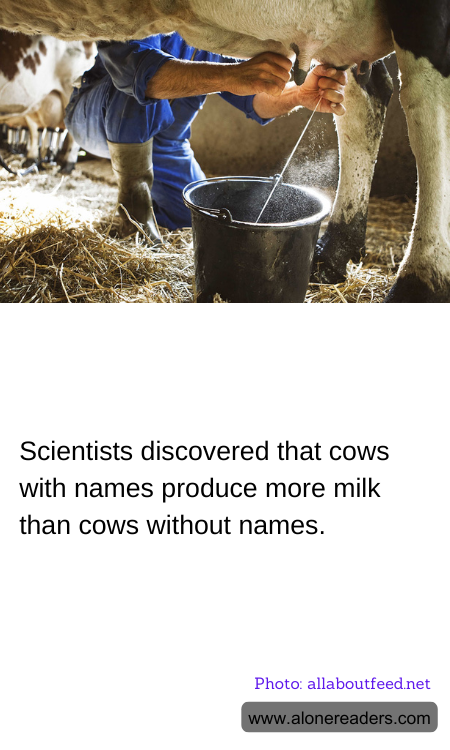
In a fascinating intersection of animal behavior and agricultural science, researchers have discovered that cows with names produce more milk than their nameless counterparts. This intriguing finding sheds light on the importance of human-animal interaction in farming and suggests that the way we treat livestock can have tangible effects on productivity.
The study, conducted by a team of scientists in the United Kingdom, involved observing the milking habits and production levels of over 500 dairy cows. The researchers found that cows who were given individual names and treated with more personal care produced up to 258 liters more milk annually than those who were not named. This increase in milk production is attributed to the positive effects of personalized attention and the reduction of stress in the animals.
Naming cows and treating them as individuals rather than mere units of production appears to create a more relaxed and comfortable environment for the animals. This approach aligns with the broader understanding of animal welfare, which emphasizes the importance of mental and emotional well-being in addition to physical health. By reducing stress and anxiety, named cows are likely to experience a more stable hormonal balance, which can lead to increased milk yield.
The implications of this study are significant for the dairy industry. It suggests that simple changes in the way farmers interact with their livestock can lead to improved productivity without the need for costly technological interventions. This finding encourages a shift towards more humane and ethical farming practices, where the emotional needs of animals are considered alongside their physical care.
Moreover, this research highlights the broader impact of empathy and kindness in farming. By fostering a more compassionate approach to animal husbandry, farmers can not only enhance productivity but also contribute to the overall well-being of their livestock. This can lead to a more sustainable and ethical agricultural system, benefiting both the animals and the farmers who rely on them.
In conclusion, the discovery that named cows produce more milk than unnamed ones underscores the importance of human-animal relationships in agriculture. It serves as a reminder that treating animals with respect and care can have profound effects on their productivity and well-being. As the dairy industry continues to evolve, integrating these findings into everyday farming practices could pave the way for a more sustainable and humane future.
