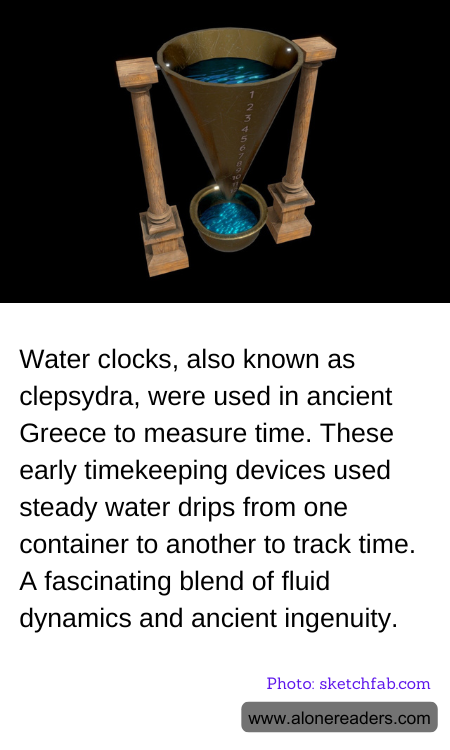
In the annals of timekeeping history, water clocks, or clepsydra, stand out as a testament to human ingenuity and the quest to measure the passage of time. These ancient devices, used extensively in ancient Greece, harnessed the simple yet profound principles of fluid dynamics to track time with remarkable precision. The clepsydra, which translates to "water thief" in Greek, represents one of the earliest forms of timekeeping, predating the mechanical clock by several centuries.
The basic design of a water clock involves two containers: one positioned above the other. Water drips steadily from the upper container into the lower one, and the passage of time is measured by the amount of water that has transferred. This seemingly simple mechanism required a deep understanding of fluid dynamics to ensure that the flow of water remained consistent and unaffected by external factors such as temperature and pressure. The Greeks, known for their advancements in science and philosophy, were able to refine this technology to a level of sophistication that allowed for relatively accurate time measurement.
Water clocks were not only practical but also held cultural significance in ancient Greece. They were often used in legal settings to limit the time allocated for speeches, ensuring fairness in the judicial process. The clepsydra was also employed in various public and private settings, from tracking the hours of the day to timing athletic events. This versatility highlights the importance of timekeeping in ancient societies and the innovative ways in which they adapted available resources to meet their needs.
The construction of a clepsydra required careful consideration of materials and design. The containers were typically made from stone, metal, or pottery, and the size of the hole through which the water flowed was meticulously calibrated. Some designs included markings on the interior of the receiving container to indicate the passage of specific time intervals, allowing for more precise readings. The Greeks' ability to manipulate these variables demonstrates their advanced understanding of both engineering and mathematics.
While modern technology has long surpassed the water clock in terms of accuracy and convenience, the clepsydra remains a fascinating example of early scientific thought and innovation. It serves as a reminder of the human desire to understand and quantify the world around us, a pursuit that continues to drive technological advancement today. The legacy of the water clock is a testament to the creativity and resourcefulness of ancient civilizations, whose contributions continue to influence our understanding of time and its measurement.
