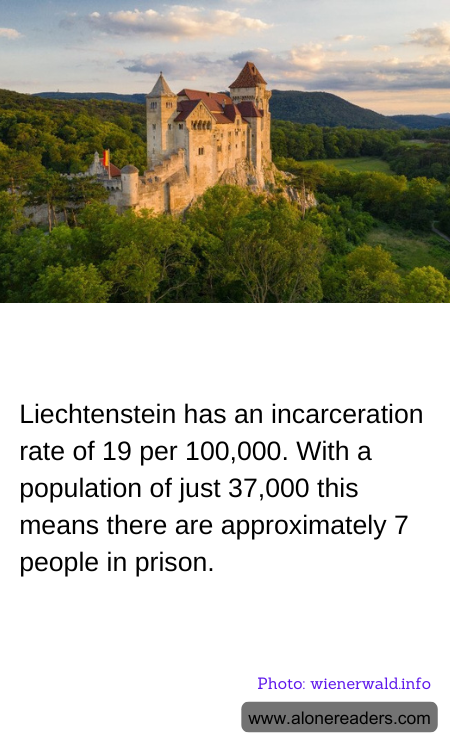
Nestled between Switzerland and Austria, the tiny principality of Liechtenstein is known for its stunning alpine landscapes and prosperous economy. However, it is also notable for its remarkably low incarceration rate. With an incarceration rate of just 19 per 100,000 people, Liechtenstein stands out as a model of minimal imprisonment. Given its population of approximately 37,000, this translates to only about seven individuals currently serving time behind bars.
This low incarceration rate is reflective of Liechtenstein's broader approach to crime and punishment, which emphasizes rehabilitation over retribution. The country's legal system is designed to focus on restorative justice, aiming to reintegrate offenders into society rather than isolate them. This approach is supported by a robust social welfare system and a strong emphasis on education and employment opportunities, which help prevent crime by addressing its root causes.
Liechtenstein's small population also plays a significant role in its low crime rates. The close-knit community fosters a sense of accountability and mutual respect among its residents. This social cohesion is further reinforced by the country's economic stability, which reduces the financial pressures that often lead to criminal behavior. With one of the highest GDP per capita in the world, Liechtenstein provides its citizens with a high standard of living, reducing the incentive for crime.
Moreover, the legal framework in Liechtenstein is characterized by its efficiency and fairness. The judicial system is well-resourced and operates with a high degree of transparency, ensuring that justice is administered swiftly and equitably. This efficiency not only deters crime but also ensures that those who do offend are dealt with in a manner that is both just and humane.
While the numbers are small, the implications of Liechtenstein's incarceration rate are significant. It serves as a reminder that a society can maintain law and order without resorting to mass imprisonment. By focusing on prevention, rehabilitation, and social cohesion, Liechtenstein provides a compelling example of how a nation can achieve safety and security while respecting the dignity and rights of its citizens.
In a world where many countries grapple with overcrowded prisons and high recidivism rates, Liechtenstein's approach offers valuable insights. It challenges the notion that harsher penalties and larger prison populations are necessary for maintaining public safety. Instead, it highlights the potential of alternative strategies that prioritize human dignity and social well-being. As such, Liechtenstein's low incarceration rate is not just a statistic; it is a testament to the power of a compassionate and forward-thinking approach to justice.
