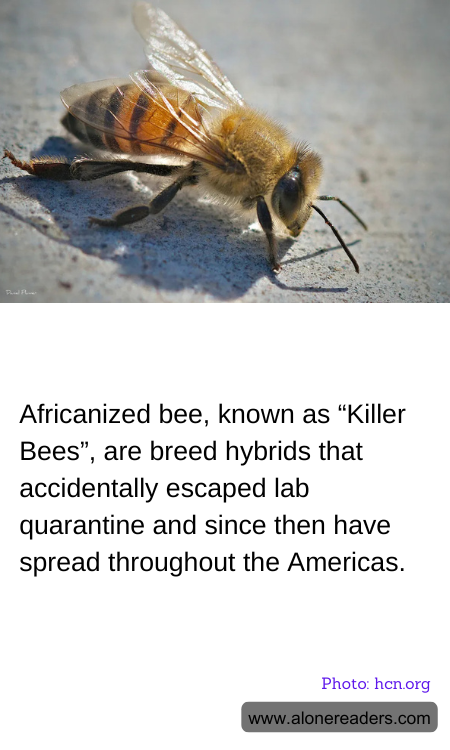
Africanized bees, often referred to as "Killer Bees," have a fascinating yet cautionary tale that underscores the complexities of human intervention in nature. These bees are a hybrid species, created by crossbreeding the African honeybee with various European honeybee subspecies. The initial goal was to enhance honey production in tropical climates. However, this scientific endeavor took an unexpected turn in 1957 when a small number of these hybrid bees accidentally escaped from a laboratory in Brazil. This escape marked the beginning of a rapid and widespread migration throughout the Americas, leading to significant ecological and social impacts.
The Africanized bee is known for its heightened defensiveness compared to its European counterparts. While their sting is no more potent than that of a regular honeybee, Africanized bees are more likely to defend their hive aggressively and in larger numbers. This behavior has earned them the moniker "Killer Bees," a name that, while sensational, highlights the potential danger they pose when provoked. Despite their fearsome reputation, Africanized bees are not inherently more dangerous than other bees unless their hive is threatened.
Since their escape, Africanized bees have spread extensively, moving northward through South America, Central America, and into the southern United States. Their adaptability to various climates and environments has facilitated this expansion. They have been found as far north as California and Texas, where they continue to thrive. This spread has raised concerns about their impact on local ecosystems and agriculture. Africanized bees compete with native bee populations for resources, which can disrupt local biodiversity. However, they also contribute to pollination, an essential ecological service, albeit with a more aggressive approach.
Efforts to manage and mitigate the spread of Africanized bees have been ongoing. Beekeepers and researchers have developed strategies to manage these bees, such as breeding programs aimed at reducing their aggressive traits. Public education campaigns have also been crucial in helping communities understand how to coexist with these bees safely. People are advised to remain calm and avoid sudden movements if they encounter a swarm, as well as to seek professional help for hive removal.
Despite their challenges, Africanized bees serve as a reminder of the delicate balance between human innovation and nature. Their story is a testament to the unintended consequences that can arise from scientific experimentation. As they continue to adapt and spread, Africanized bees highlight the importance of responsible environmental stewardship and the need for ongoing research to understand and manage their impact on ecosystems and human communities.
