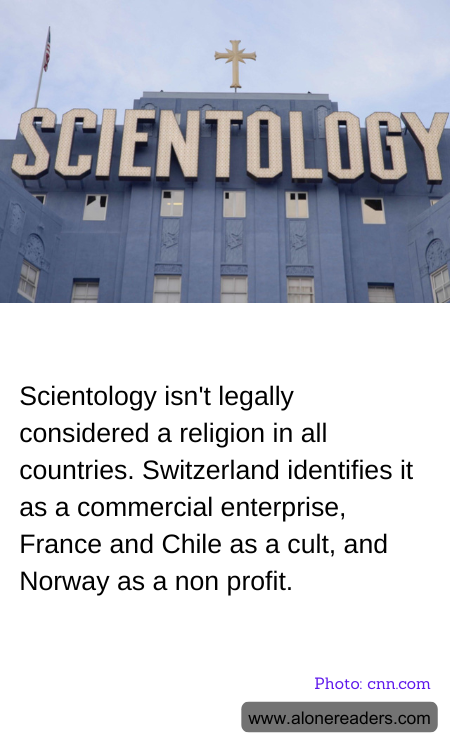
Scientology, a movement founded in the early 1950s by science fiction writer L. Ron Hubbard, has long been a subject of controversy and debate. While it claims to offer spiritual enlightenment and self-improvement, its classification varies significantly across the globe. In some countries, Scientology is recognized as a religion, while in others, it is viewed through a more skeptical lens.
In Switzerland, Scientology is not recognized as a religion but rather as a commercial enterprise. This classification stems from the Swiss government's assessment of the organization's activities, which are perceived to be more business-oriented than religious. The Swiss authorities have scrutinized Scientology's financial practices, noting that its operations resemble those of a profit-driven entity. This perspective aligns with the concerns of many critics who argue that Scientology's primary focus is on financial gain rather than spiritual guidance.
France and Chile take a more critical stance, categorizing Scientology as a cult. In France, this classification is supported by legal actions and reports that have highlighted the organization's alleged manipulative practices and financial exploitation of its members. The French government has been particularly vigilant in monitoring Scientology's activities, emphasizing the protection of individuals from potential harm. Similarly, Chile's designation of Scientology as a cult reflects concerns about its influence and the control it exerts over its followers. Both countries have expressed apprehension about the organization's methods and the impact on its adherents.
Norway, on the other hand, recognizes Scientology as a non-profit organization. This classification suggests a more neutral stance, acknowledging the group's non-commercial activities while not granting it the status of a religion. The Norwegian government's approach reflects a balance between recognizing Scientology's organizational structure and maintaining a cautious distance from endorsing its religious claims. This perspective allows for oversight without fully embracing the movement as a legitimate religious entity.
The varied classifications of Scientology across these countries highlight the complexities involved in defining what constitutes a religion. Each nation's decision is influenced by its legal framework, cultural context, and the perceived impact of Scientology on its society. These differing perspectives underscore the ongoing debate about the nature of Scientology and its place in the global religious landscape.
For those interested in understanding Scientology, these international viewpoints offer valuable insights into the organization's multifaceted identity. Whether seen as a commercial enterprise, a cult, or a non-profit, Scientology continues to provoke discussion and analysis, prompting individuals and governments alike to question the boundaries of religious freedom and the responsibilities of spiritual organizations.
