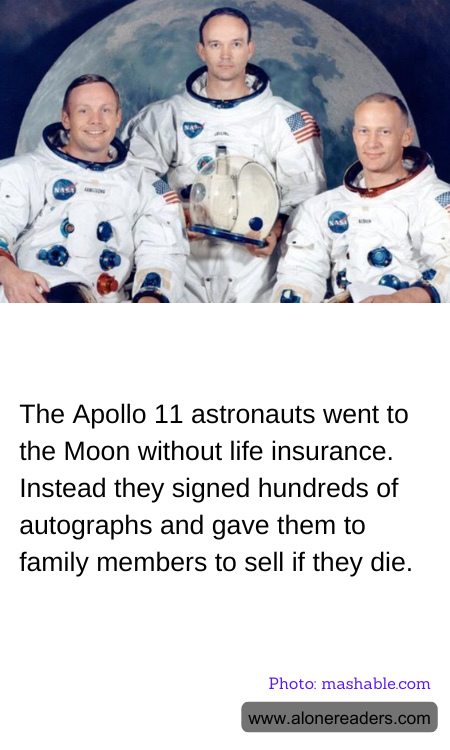
In the summer of 1969, as the world watched with bated breath, three astronauts embarked on a journey that would forever change the course of human history. Neil Armstrong, Buzz Aldrin, and Michael Collins were the brave souls of Apollo 11, the first mission to land humans on the Moon. While their mission was meticulously planned, one crucial aspect of their lives was left to chance: life insurance. The astronauts faced the very real possibility that they might not return from their lunar adventure, yet they had no life insurance policy to provide financial security for their families in the event of a tragedy.
The lack of life insurance was not due to oversight but rather a consequence of the unique nature of their mission. Insurance companies were unwilling to cover the astronauts due to the unprecedented risks involved in space travel. The premiums, if available, would have been astronomically high, making it impractical for the astronauts to secure traditional life insurance policies. Faced with this dilemma, the Apollo 11 crew devised a creative and heartfelt solution to ensure their families would be financially supported if the worst were to happen.
In the months leading up to their historic flight, Armstrong, Aldrin, and Collins signed hundreds of autographs, which they entrusted to their families. These autographs, known as "insurance covers," were intended to be sold by their families in the event of their untimely deaths. The astronauts understood that their signatures would become highly valuable memorabilia, especially if they did not return from the Moon. This ingenious plan provided a form of financial security that was both practical and deeply personal.
The autographs were carefully dated and often included messages of goodwill, making them more than just signatures. They were tokens of love and hope, imbued with the astronauts' determination and courage. The plan was a testament to the astronauts' foresight and their commitment to protecting their loved ones, even as they prepared to venture into the unknown.
Fortunately, the mission was a success, and the autographs were never needed for their intended purpose. Neil Armstrong's iconic words, "That's one small step for man, one giant leap for mankind," echoed across the globe as he became the first human to set foot on the lunar surface. The Apollo 11 mission not only achieved its scientific and exploratory goals but also demonstrated the resilience and ingenuity of the human spirit.
Today, the story of the Apollo 11 autographs serves as a poignant reminder of the personal sacrifices made by those who dare to explore the final frontier. It highlights the extraordinary lengths to which the astronauts went to ensure their families' well-being, even as they embarked on a mission that would push the boundaries of human achievement. The legacy of Apollo 11 is not just one of technological triumph but also of the enduring human values of love, courage, and ingenuity.
