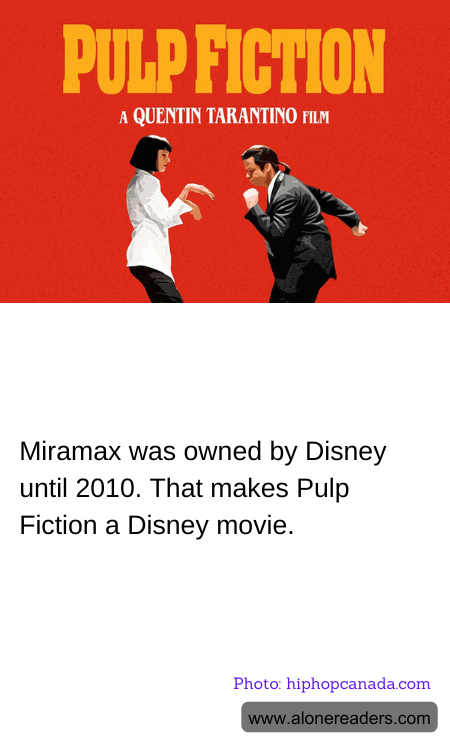
In the realm of cinema, few films have achieved the iconic status of Quentin Tarantino's "Pulp Fiction." Released in 1994, this film is renowned for its non-linear narrative, eclectic dialogue, and memorable characters. However, an intriguing piece of trivia often surprises movie enthusiasts: "Pulp Fiction" was technically a Disney movie. This claim stems from the fact that Miramax Films, the studio behind "Pulp Fiction," was owned by The Walt Disney Company from 1993 until 2010.
Miramax, founded by Bob and Harvey Weinstein in 1979, was known for producing and distributing independent films that often pushed the boundaries of mainstream cinema. In 1993, Disney acquired Miramax for approximately $60 million, aiming to expand its reach into more adult-oriented and independent films while maintaining its family-friendly brand image. Under Disney's ownership, Miramax operated with a significant degree of autonomy, allowing it to continue producing films that were distinct from Disney's traditional offerings.
"Pulp Fiction" was one of the first major successes for Miramax under Disney's ownership. The film's gritty and unconventional style was a stark contrast to Disney's typical family-friendly productions. Despite its mature content, "Pulp Fiction" was a critical and commercial success, earning over $200 million worldwide and winning the Palme d'Or at the Cannes Film Festival. It also received seven Academy Award nominations, winning Best Original Screenplay for Tarantino and co-writer Roger Avary.
The notion of "Pulp Fiction" being a Disney movie is both amusing and thought-provoking. It highlights the diverse range of content that can exist under a single corporate umbrella. While Disney is synonymous with animated classics and theme parks, its ownership of Miramax allowed it to venture into new cinematic territories. This strategic move demonstrated Disney's ability to diversify its portfolio and cater to a broader audience without diluting its core brand identity.
In 2010, Disney sold Miramax to Filmyard Holdings, a group of investors, for approximately $660 million. This marked the end of Disney's direct involvement with the studio. Despite the change in ownership, the legacy of Miramax's films, including "Pulp Fiction," continues to endure. The film remains a testament to the creative freedom that Miramax enjoyed during its time under Disney, and it serves as a reminder of the complex and often surprising nature of the film industry.
In conclusion, while it may seem paradoxical to label "Pulp Fiction" as a Disney movie, the historical context of Miramax's ownership makes this claim technically accurate. It underscores the multifaceted nature of media conglomerates and their ability to encompass a wide array of content. For fans of both Disney and Tarantino, this piece of trivia adds an intriguing layer to the rich tapestry of film history.
