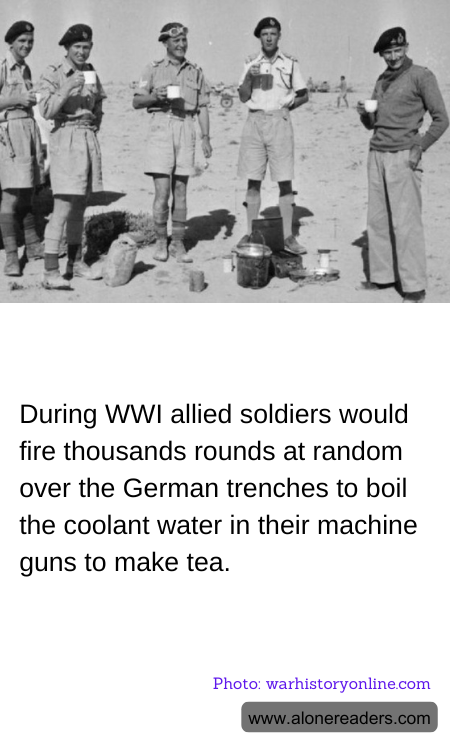
During the tumultuous years of World War I, soldiers on the front lines faced not only the perils of combat but also the challenges of daily survival in the trenches. Among the many inventive solutions devised to cope with these hardships, one particularly curious practice stands out: Allied soldiers firing thousands of rounds at random over German trenches to boil the coolant water in their machine guns, all in the name of making tea.
The trenches of World War I were notorious for their harsh conditions. Soldiers endured cold, wet, and muddy environments, often with limited access to basic necessities. In such circumstances, a hot cup of tea became more than just a comforting beverage; it was a vital morale booster and a small reminder of home. However, the logistics of brewing tea in the trenches were far from straightforward. Traditional methods of boiling water were impractical, given the constant threat of enemy fire and the lack of proper cooking facilities.
Enter the machine gun, a formidable weapon of war that also inadvertently became a tool for tea-making. Machine guns, such as the British Vickers, required water cooling to prevent overheating during sustained firing. The water used in these guns would heat up significantly after firing a large number of rounds. Ingeniously, soldiers realized they could use this hot water to brew tea. By firing their guns in short bursts or even at random, they could heat the coolant water to a suitable temperature for making tea.
This practice, while seemingly bizarre, highlights the resourcefulness and adaptability of soldiers during the war. It also underscores the importance of small comforts in maintaining morale amidst the grim realities of trench warfare. The act of making tea became a ritual that provided a sense of normalcy and camaraderie among the troops. Sharing a cup of tea allowed soldiers to momentarily escape the horrors of war and connect with one another on a human level.
While the idea of using machine gun coolant water for tea might seem peculiar today, it serves as a testament to the ingenuity and resilience of those who served in World War I. It is a reminder that even in the darkest times, people find ways to adapt and make the best of their circumstances. The story of soldiers firing rounds to make tea is not just a quirky anecdote from history; it is a symbol of the enduring human spirit and the lengths to which individuals will go to find comfort and connection in the face of adversity.
