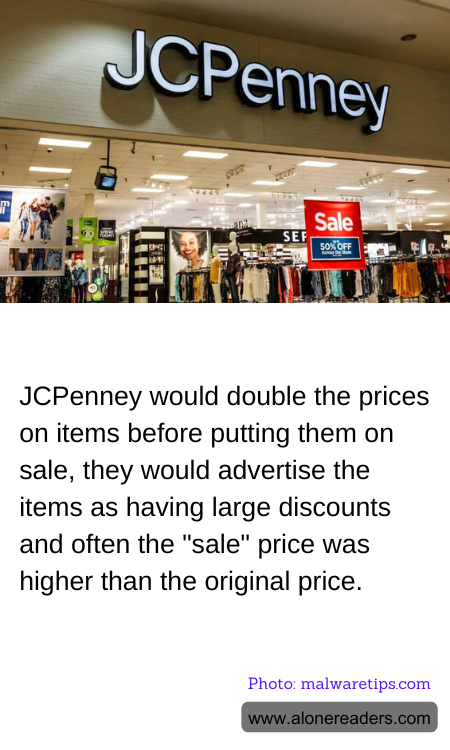
In the world of retail, pricing strategies can often be as complex as they are controversial. One such strategy that has drawn significant attention involves the practice of inflating prices before offering items at a so-called discount. JCPenney, a well-known American department store chain, has been scrutinized for allegedly engaging in this tactic, where items are marked up significantly before being advertised as being on sale. This practice raises ethical questions and concerns about consumer trust, as it can lead to customers paying more than they might have initially anticipated.
The concept behind this strategy is simple: by doubling the prices of items before a sale, retailers can create the illusion of a substantial discount. This can be particularly enticing to consumers who are always on the lookout for a good deal. However, the reality is that the "sale" price may still be higher than the original price before the markup. This can leave customers feeling misled and frustrated, especially when they realize that the perceived savings are not as significant as they were led to believe.
For JCPenney, this pricing strategy has been a double-edged sword. On one hand, it can drive short-term sales by attracting bargain hunters who are eager to take advantage of what appears to be a great deal. On the other hand, it can damage the brand's reputation and erode consumer trust over time. In an era where transparency and authenticity are highly valued by consumers, such practices can backfire, leading to negative publicity and a loss of customer loyalty.
The implications of this pricing strategy extend beyond just consumer trust. It also raises questions about the broader retail industry's pricing practices and the need for clearer regulations. While it is not uncommon for retailers to use sales and discounts as a way to boost sales, the line between legitimate discounts and deceptive pricing can sometimes be blurred. This has led to calls for more stringent guidelines to ensure that consumers are not being misled by inflated prices and false discounts.
In response to criticism, some retailers, including JCPenney, have attempted to reform their pricing strategies to be more transparent and straightforward. This includes adopting everyday low pricing models, where items are offered at a fair price without the need for constant sales and discounts. Such approaches can help rebuild consumer trust and create a more honest shopping experience.
Ultimately, the practice of inflating prices before offering discounts is a reminder of the importance of ethical business practices in the retail industry. As consumers become more informed and discerning, retailers must adapt by prioritizing transparency and fairness in their pricing strategies. Only then can they hope to foster long-term relationships with their customers and maintain a positive brand image in an increasingly competitive market.
