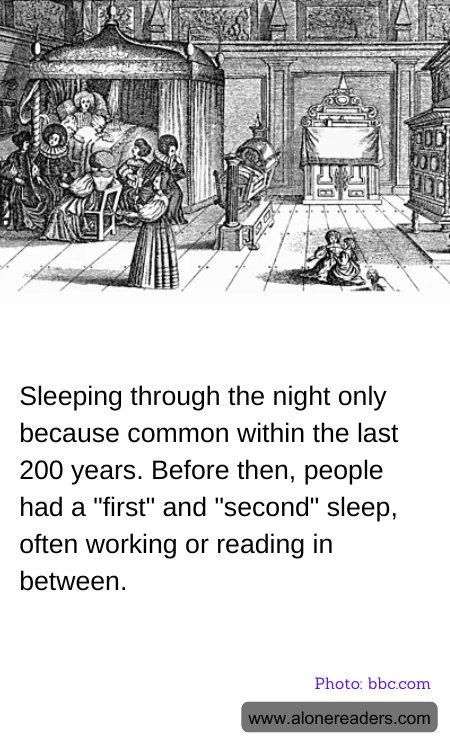
For most of us today, the notion of sleeping through the night in one uninterrupted stretch seems like the most natural thing in the world. However, this pattern of sleep is a relatively recent development in human history, emerging prominently only in the last 200 years. Prior to this shift, people commonly experienced what was known as "segmented sleep," which involved two distinct periods of rest, often referred to as "first" and "second" sleep, with a period of wakefulness in between.
Historical evidence suggests that segmented sleep was a widespread practice across various cultures. References to this sleep pattern can be found in literature, diaries, and medical texts dating back to ancient times. During the Middle Ages and into the early modern period, people would typically retire to bed shortly after dusk, sleep for a few hours, and then wake up around midnight. This waking period, which could last for an hour or more, was often used for a variety of activities. Some people would engage in quiet reflection, prayer, or meditation, while others might read, write, or even visit neighbors. This time was also sometimes used for more practical tasks such as tending to the fire or household chores.
The reasons behind this segmented sleep pattern are rooted in both the natural environment and societal structures of the time. Before the advent of artificial lighting, people's daily routines were closely aligned with the natural light-dark cycle. The long nights of winter, in particular, lent themselves to a division of sleep into two phases. Additionally, the lack of modern entertainment and the demands of agrarian lifestyles meant that people went to bed earlier and rose with the sun, making segmented sleep a practical adaptation.
The transition to consolidated sleep began with the Industrial Revolution and the advent of artificial lighting. As cities grew and technology advanced, the structure of daily life changed dramatically. The introduction of street lighting and the widespread use of gas and electric lights extended the day, allowing people to stay active and engaged well into the night. This shift in lifestyle, coupled with the demands of industrial work schedules, gradually led to the adoption of a single, continuous sleep period.
Today, the idea of waking up in the middle of the night might seem unusual or even problematic, often associated with insomnia or sleep disturbances. However, understanding the historical context of segmented sleep can offer a different perspective on our sleep patterns. It reminds us that human sleep is adaptable and has evolved in response to changing environments and societal needs.
As we continue to explore the complexities of sleep, it is important to recognize that there is no one-size-fits-all approach. While the consolidated sleep pattern is now the norm, the legacy of segmented sleep serves as a fascinating reminder of the diverse ways humans have adapted to the rhythms of life. Whether through historical curiosity or personal experimentation, revisiting the concept of first and second sleep can provide valuable insights into the nature of rest and the flexibility of human habits.
