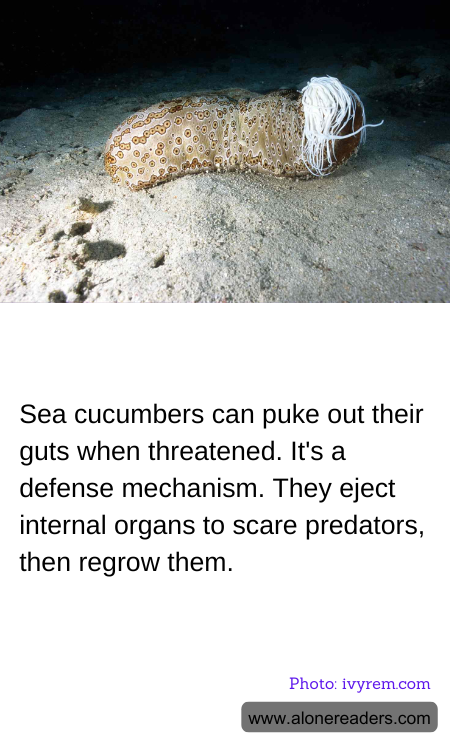
In the vast and mysterious depths of the ocean, where survival often hinges on the most peculiar of adaptations, the sea cucumber stands out with its extraordinary defense mechanism. These unassuming marine creatures, which might appear to be nothing more than simple, soft-bodied animals, possess a remarkable ability to deter predators: they can eject their internal organs.
When faced with a threat, sea cucumbers employ a strategy known as evisceration. This involves expelling their guts, a dramatic and somewhat gruesome spectacle that serves to startle and confuse potential predators. The expelled organs, which can include parts of the digestive tract, respiratory tree, and even gonads, are often sticky and can entangle or deter the predator long enough for the sea cucumber to make its escape. This self-sacrificial act might seem extreme, but it is a testament to the lengths to which nature will go to ensure survival.
The process of evisceration is not only a defense mechanism but also a fascinating example of regeneration. After the sea cucumber has rid itself of its internal organs, it embarks on a remarkable journey of regrowth. Within weeks, the sea cucumber can regenerate its lost organs, restoring itself to full health. This ability to regenerate is not only crucial for the survival of individual sea cucumbers but also highlights the incredible resilience and adaptability of life in the ocean.
Sea cucumbers play a vital role in marine ecosystems. By feeding on detritus and organic matter on the ocean floor, they help recycle nutrients and maintain the health of their environment. Their unique defense mechanism ensures that they can continue to perform this essential ecological function, even in the face of predation.
For many people, the idea of an animal ejecting its internal organs might seem bizarre or even unsettling. However, it is important to appreciate the ingenuity of such adaptations. The sea cucumber's ability to sacrifice and then regenerate its organs is a powerful reminder of the complexity and wonder of life beneath the waves. It challenges our understanding of survival and adaptation, offering a glimpse into the myriad ways in which life has evolved to thrive in even the most challenging environments.
In conclusion, the sea cucumber's defense mechanism is a fascinating example of nature's creativity. By sacrificing its internal organs, the sea cucumber not only protects itself but also showcases the incredible regenerative powers that some marine animals possess. This remarkable ability ensures that sea cucumbers continue to play their crucial role in the ocean's delicate balance, reminding us of the intricate and interconnected web of life that exists beneath the sea's surface.
