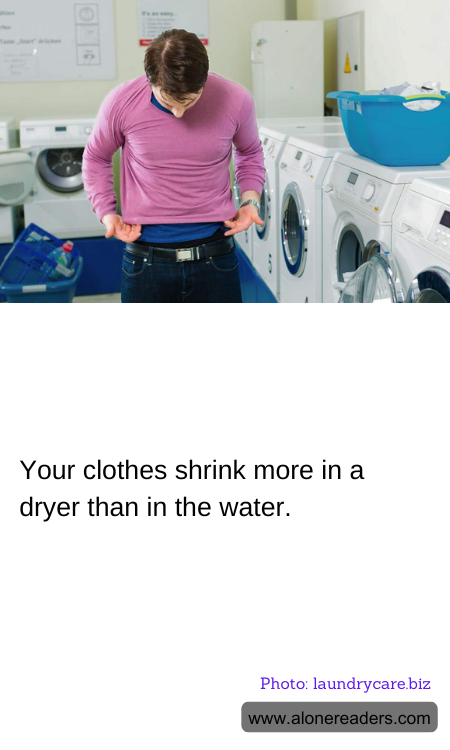
When it comes to doing laundry, many people have experienced the frustration of pulling a favorite shirt or pair of jeans out of the dryer, only to find that it has shrunk. While it's a common belief that clothes shrink primarily in water, the truth is that the dryer plays a more significant role in this process. Understanding why clothes shrink more in a dryer than in water can help you take better care of your garments and extend their lifespan.
The primary reason clothes shrink in the dryer is due to the combination of heat and mechanical action. Most fabrics are made from fibers that are spun into threads and then woven or knitted together. These fibers have a natural tendency to contract when exposed to heat. In a dryer, the high temperatures cause the fibers to tighten and draw closer together, leading to a noticeable reduction in the size of the garment. This effect is particularly pronounced in natural fibers like cotton and wool, which are more susceptible to heat-induced shrinkage.
In addition to heat, the tumbling action of the dryer contributes to shrinkage. As clothes are tossed around inside the drum, the constant movement causes the fibers to rub against each other. This friction can lead to further tightening of the fibers, exacerbating the shrinkage effect. The combination of heat and mechanical action creates a perfect storm for shrinking, making the dryer a more significant culprit than water alone.
Water does play a role in the shrinking process, but its impact is generally less severe. When clothes are washed, the fibers absorb water and swell. This swelling can cause temporary stretching, but as the clothes dry, the fibers return to their original state. However, if the drying process involves high heat, as in a dryer, the fibers may contract more than they originally expanded, resulting in shrinkage. In contrast, air drying allows the fibers to return to their natural state more gradually, reducing the risk of shrinkage.
To minimize the risk of shrinking your clothes, consider a few practical tips. First, always check the care labels on your garments for specific washing and drying instructions. Opt for air drying when possible, especially for items made from natural fibers. If you must use a dryer, choose a low-heat setting and remove clothes while they are still slightly damp to finish drying them flat or on a hanger. Additionally, using a gentle cycle can reduce the mechanical action that contributes to shrinkage.
In conclusion, while water plays a role in the shrinking process, the dryer is the primary factor responsible for reducing the size of your clothes. By understanding the mechanics behind shrinkage and taking preventive measures, you can help preserve the fit and appearance of your favorite garments, ensuring they remain a staple in your wardrobe for years to come.
