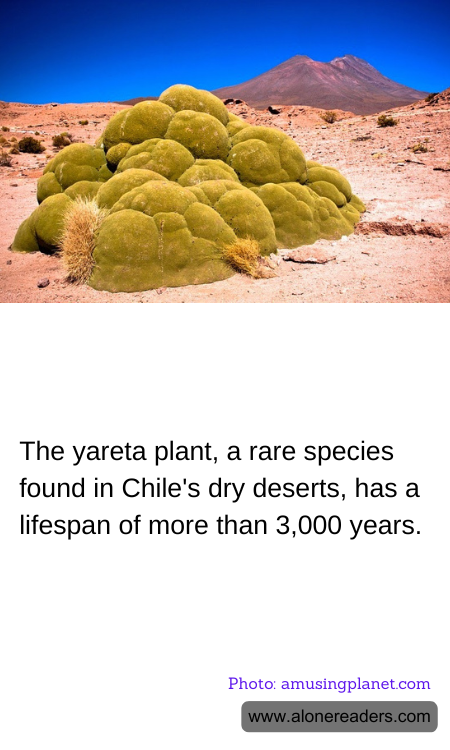
In the arid expanses of Chile's dry deserts, a remarkable botanical wonder quietly thrives, defying the harsh conditions that surround it. The yareta plant, known scientifically as Azorella compacta, is a rare species that has captured the fascination of botanists and nature enthusiasts alike. What makes this plant truly extraordinary is its astonishing lifespan, which can exceed 3,000 years, making it one of the longest-living organisms on Earth.
The yareta plant is a member of the Apiaceae family, which includes more familiar plants like carrots and parsley. However, unlike its culinary relatives, the yareta is uniquely adapted to survive in one of the most inhospitable environments on the planet. Found primarily in the high-altitude regions of the Andes, this plant has evolved to endure extreme temperatures, intense solar radiation, and minimal rainfall. Its dense, cushion-like form helps it conserve moisture and resist the harsh winds that sweep across the desert landscape.
One of the most striking features of the yareta is its appearance. From a distance, it resembles a vibrant green boulder, seamlessly blending into the rocky terrain. Upon closer inspection, the plant reveals a tightly packed mass of tiny, evergreen leaves that form a dense mat. This growth pattern not only minimizes water loss but also provides insulation against the cold nights typical of high-altitude deserts. The plant's slow growth rate, often less than a millimeter per year, is a testament to its resilience and adaptation to its environment.
The longevity of the yareta is a subject of great interest to scientists. Its ability to survive for millennia offers valuable insights into the mechanisms of plant longevity and adaptation. Researchers are keen to understand how the yareta's cellular structures and metabolic processes contribute to its remarkable lifespan. Such knowledge could have broader implications for understanding aging and resilience in other plant species, and perhaps even in humans.
Despite its resilience, the yareta faces threats from human activity. Historically, it has been harvested for fuel due to its high resin content, which allows it to burn slowly and steadily. This practice, along with climate change and habitat disturbance, poses a risk to the plant's survival. Conservation efforts are crucial to protect this ancient species and ensure that it continues to thrive in its natural habitat.
The yareta plant stands as a symbol of endurance and adaptation, a living testament to the incredible diversity of life that can flourish even in the most challenging environments. Its presence in the Chilean deserts not only enriches the landscape but also serves as a reminder of the intricate balance of nature and the importance of preserving our planet's unique ecosystems for future generations. As we continue to explore and understand the natural world, the yareta remains a beacon of resilience, quietly persisting through the ages.
