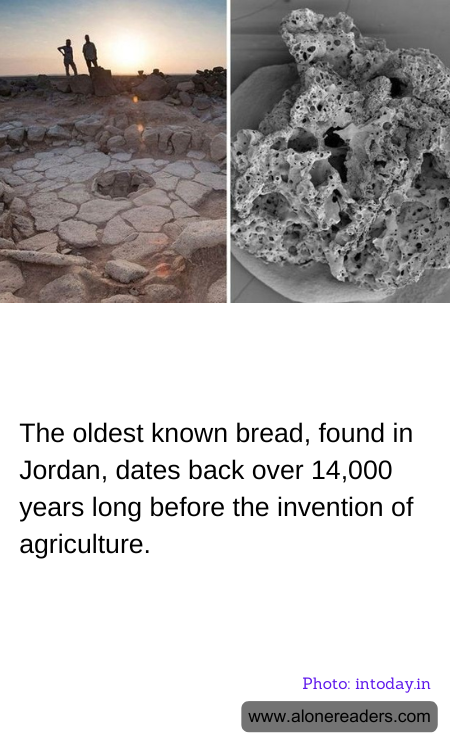
In the arid landscapes of northeastern Jordan, a remarkable discovery has reshaped our understanding of human history and culinary evolution. Archaeologists have unearthed the oldest known bread, dating back over 14,000 years, a finding that predates the advent of agriculture by several millennia. This ancient bread, found at the archaeological site of Shubayqa 1, offers a fascinating glimpse into the dietary practices and ingenuity of our hunter-gatherer ancestors.
The bread was discovered in the form of charred crumbs, preserved in the hearths of a Natufian settlement. The Natufians were a semi-sedentary culture that existed during the Epipaleolithic period, a time when humans were transitioning from nomadic lifestyles to more settled communities. The bread's age, determined through radiocarbon dating, challenges the long-held belief that bread-making began only after the development of agriculture around 10,000 years ago. Instead, it suggests that the desire for bread-like foods may have been a driving force behind the domestication of grains.
This ancient bread was made from wild cereals, such as barley, einkorn wheat, and oats, mixed with the roots of plants like club-rush. The ingredients were ground into flour and then baked, resulting in a flatbread that likely had a texture and flavor quite different from the bread we know today. The process of grinding and baking these ingredients would have been labor-intensive, indicating that bread was a valued food item, possibly reserved for special occasions or as a communal meal.
The discovery of this bread not only highlights the culinary skills of the Natufians but also underscores the importance of bread in human culture. Bread has long been a staple food in many societies, symbolizing sustenance and community. The fact that our ancestors were making bread long before they cultivated crops suggests that the desire for this food was deeply rooted in human culture, possibly influencing the shift towards agricultural societies.
This finding also opens up new avenues for understanding the social and economic dynamics of prehistoric communities. The production of bread would have required cooperation and sharing of resources, hinting at complex social structures and the beginnings of organized food production. It challenges us to rethink the timeline of technological and cultural advancements, showing that our ancestors were more innovative and resourceful than previously thought.
In essence, the discovery of the world's oldest bread in Jordan is more than just a culinary curiosity; it is a testament to human ingenuity and adaptability. It reminds us that the quest for food has always been a catalyst for innovation and change, shaping the course of human history in profound ways. As we continue to explore our past, such discoveries enrich our understanding of where we come from and how our ancestors laid the foundations for the world we live in today.
