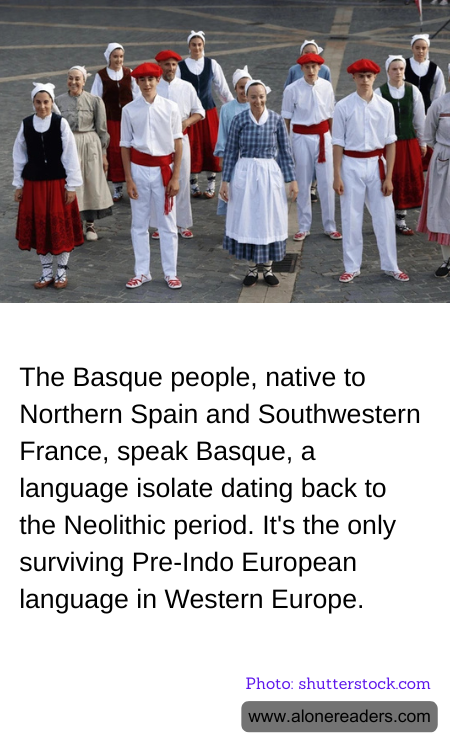
Nestled between the verdant landscapes of Northern Spain and the rugged terrains of Southwestern France lies a region steeped in history and cultural richness. This is the land of the Basque people, a unique ethnic group whose roots trace back thousands of years. Among the many fascinating aspects of the Basque culture, their language, known as Euskara or Basque, stands out as a remarkable testament to their enduring heritage.
Basque is a language isolate, meaning it has no known relatives or connections to any other language family. This linguistic enigma has puzzled scholars for centuries, as it predates the arrival of Indo-European languages in Western Europe. The origins of Basque are shrouded in mystery, with some theories suggesting it dates back to the Neolithic period. This makes it the only surviving Pre-Indo European language in the region, offering a rare glimpse into the linguistic landscape of ancient Europe.
Despite its ancient roots, the Basque language has not remained static. It has evolved over the millennia, adapting to the changing times while retaining its core structure and vocabulary. Today, Euskara is spoken by approximately 750,000 people, primarily in the Basque Country, which spans both sides of the Pyrenees. Efforts to preserve and promote the language have been robust, with educational programs and media initiatives playing a crucial role in its revitalization.
The resilience of the Basque language is mirrored in the cultural identity of the Basque people. Their traditions, music, and folklore are deeply intertwined with their linguistic heritage. Festivals such as the Aste Nagusia in Bilbao and the San Fermín in Pamplona showcase the vibrancy of Basque culture, drawing visitors from around the world to experience their unique customs and celebrations.
In recent years, the Basque language has gained recognition and support from both regional and national governments. In Spain, Euskara is one of the official languages of the Basque Autonomous Community and Navarre, while in France, efforts are underway to increase its visibility and use. This institutional backing has been instrumental in fostering a sense of pride and continuity among the Basque people.
The story of the Basque language is not just one of survival but also of resilience and adaptation. It serves as a powerful reminder of the importance of preserving linguistic diversity in an increasingly globalized world. As the Basque people continue to celebrate and nurture their linguistic heritage, they offer a compelling example of how language can serve as a cornerstone of cultural identity and community cohesion.
In a world where many languages face the threat of extinction, the Basque language stands as a beacon of hope and inspiration. It invites us to appreciate the richness of human expression and the profound connections between language, culture, and history. As we look to the future, the story of the Basque people and their language reminds us of the enduring power of cultural heritage and the vital role it plays in shaping our collective human experience.
