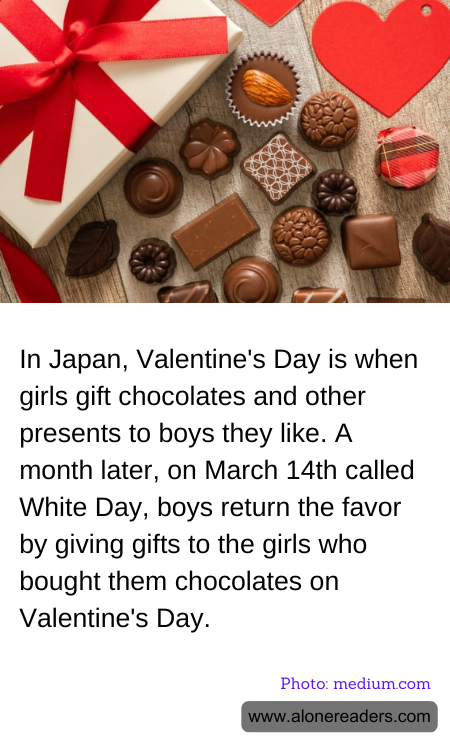
In Japan, Valentine's Day unfolds with a unique twist that sets it apart from the Western tradition. On February 14th, it is customary for girls and women to present chocolates and other thoughtful gifts to the boys and men they admire. This practice, deeply rooted in Japanese culture, is not merely about romantic gestures but also extends to friendships and professional relationships. The chocolates given on this day are categorized into two types: "giri-choco," or obligation chocolates, which are given to friends, colleagues, and acquaintances, and "honmei-choco," or true feeling chocolates, which are reserved for romantic interests.
The tradition of gifting chocolates on Valentine's Day in Japan began in the 1950s, largely influenced by marketing campaigns from confectionery companies. Over the years, it has evolved into a significant cultural event, with stores and chocolatiers offering a wide array of beautifully crafted chocolates to cater to the occasion. For many, the act of giving chocolates is a way to express gratitude, affection, and sometimes, romantic interest.
A month later, on March 14th, the tables turn with the celebration of White Day. This day was introduced in the 1970s as a response to Valentine's Day, giving boys and men the opportunity to reciprocate the gifts they received. On White Day, it is customary for them to present gifts to the girls and women who gave them chocolates. These gifts often include white chocolates, cookies, jewelry, or other tokens of appreciation. The expectation is that the return gift should be of equal or greater value, symbolizing the giver's gratitude and acknowledgment.
White Day is not just about reciprocation but also about deepening relationships and expressing feelings that may have been left unspoken on Valentine's Day. It provides an opportunity for boys and men to show their appreciation and affection, reinforcing bonds and sometimes even sparking new romantic relationships. The tradition of White Day has grown over the years, becoming an integral part of Japanese culture and a much-anticipated event.
These twin celebrations of Valentine's Day and White Day highlight the importance of thoughtfulness and reciprocity in relationships. They emphasize the value of expressing emotions and appreciation through gestures, whether small or grand. For many, these days are not just about the exchange of gifts but about the joy of giving and receiving, and the warmth of shared connections. As such, they continue to be cherished traditions that bring people together, fostering a sense of community and mutual respect.
