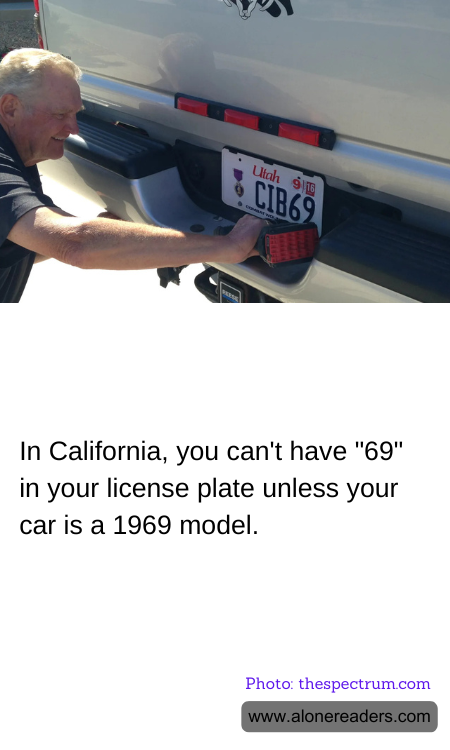
California, known for its diverse culture and progressive policies, has a unique set of rules when it comes to vehicle license plates. Among these regulations is an intriguing stipulation regarding the number "69." In the Golden State, you cannot have "69" in your license plate unless your car is a 1969 model. This rule is part of a broader effort to maintain a level of decorum and prevent potentially offensive or suggestive combinations on license plates.
The number "69" has long been associated with a particular connotation that some might find inappropriate or offensive. As a result, the California Department of Motor Vehicles (DMV) has implemented this restriction to ensure that license plates remain in good taste. This regulation is part of a larger framework that prohibits a variety of letter and number combinations deemed offensive, including those that might be interpreted as vulgar, obscene, or otherwise inappropriate for public display.
For car enthusiasts and collectors, owning a 1969 model vehicle comes with the unique privilege of being able to display the number "69" on their license plates. This exception is a nod to the historical significance and cultural impact of vehicles from that era. The year 1969 was a landmark year for the automotive industry, with iconic models like the Ford Mustang, Chevrolet Camaro, and Dodge Charger capturing the imagination of car lovers worldwide. These vehicles are celebrated for their design, performance, and the nostalgia they evoke, making them worthy of this special consideration.
While some may view this rule as overly cautious or restrictive, it reflects California's commitment to maintaining a respectful and inclusive environment on its roads. The DMV's guidelines are designed to prevent any potential discomfort or offense that might arise from license plates that could be interpreted in a negative light. By allowing only 1969 model cars to feature the number "69," the state strikes a balance between honoring automotive history and upholding community standards.
For those who are passionate about customizing their vehicles, this regulation serves as a reminder of the importance of considering the broader implications of personal expression. License plates are not just identifiers; they are a form of public communication. As such, they must adhere to standards that reflect the values and sensibilities of the community at large.
In conclusion, California's rule regarding the use of "69" in license plates is a fascinating example of how states navigate the intersection of personal expression and public decorum. By allowing only 1969 model vehicles to feature this number, the state acknowledges the historical significance of these cars while maintaining a respectful atmosphere on its roads. This regulation underscores the importance of thoughtful consideration in all forms of public expression, ensuring that the roads remain a place where everyone feels comfortable and respected.
