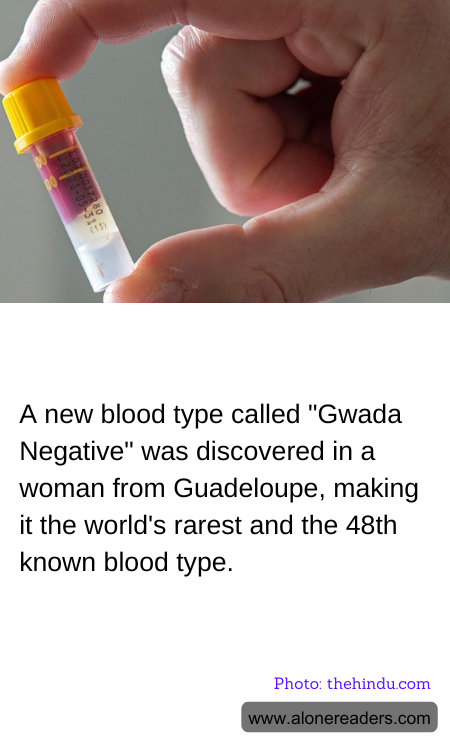
In a groundbreaking discovery that has captivated the scientific community, a new blood type, termed "Gwada Negative," has been identified in a woman from Guadeloupe. This remarkable finding not only adds a new dimension to our understanding of human blood types but also marks the 48th known blood type, making it the rarest in the world.
The discovery of Gwada Negative is a testament to the continuous advancements in medical science and the importance of genetic diversity. Blood types are determined by the presence or absence of specific antigens on the surface of red blood cells. The most commonly known blood group systems are ABO and Rh, but there are many others that contribute to the complexity of human blood. Gwada Negative appears to be a unique combination of antigens that has not been observed before, highlighting the intricate variations that can occur within human populations.
The woman from Guadeloupe, whose blood led to this discovery, was undergoing routine medical tests when scientists noticed an unusual reaction in her blood samples. Further analysis revealed the presence of previously unidentified antigens, prompting researchers to classify it as a new blood type. This finding underscores the importance of studying diverse populations, as genetic variations can lead to discoveries that have significant implications for medicine and transfusion science.
The identification of Gwada Negative has profound implications for blood transfusion and organ transplantation. Individuals with this rare blood type may face challenges in finding compatible blood donors, as traditional blood banks may not have the necessary resources to accommodate such unique needs. This discovery emphasizes the need for global collaboration in blood donation and transfusion services to ensure that individuals with rare blood types receive the care they require.
Moreover, the discovery of Gwada Negative opens new avenues for research into the genetic and evolutionary factors that contribute to blood type diversity. Understanding the genetic basis of this rare blood type could provide insights into human evolution and migration patterns, as well as potential implications for disease susceptibility and resistance.
As the scientific community delves deeper into the study of Gwada Negative, there is hope that this discovery will lead to improved medical treatments and a greater understanding of human biology. The identification of this new blood type serves as a reminder of the incredible diversity within the human species and the endless possibilities that lie within the realm of scientific exploration.
In conclusion, the discovery of Gwada Negative is a milestone in the field of hematology and genetics. It highlights the importance of embracing diversity in scientific research and the potential for groundbreaking discoveries that can enhance our understanding of human health and biology. As researchers continue to unravel the mysteries of this rare blood type, the world watches with anticipation for the insights and advancements that may follow.
