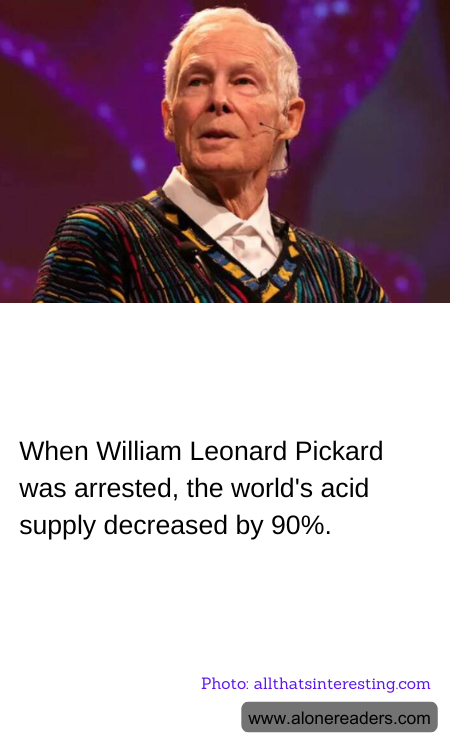
In the annals of drug enforcement history, few arrests have had as profound an impact on the illicit drug market as that of William Leonard Pickard. Known as one of the most prolific LSD manufacturers in the world, Pickard's apprehension in 2000 marked a significant turning point in the availability of this potent psychedelic substance. His arrest is often credited with causing a dramatic 90% decrease in the global supply of LSD, a statistic that underscores the scale of his operations and the influence he wielded within the underground drug trade.
William Leonard Pickard was not the typical figure one might associate with drug manufacturing. A Harvard-educated chemist, Pickard's academic credentials and intellectual prowess were formidable. However, it was his clandestine activities that captured the attention of law enforcement agencies. Operating out of a decommissioned missile silo in Kansas, Pickard and his accomplice, Clyde Apperson, were responsible for producing vast quantities of LSD, a drug that had gained notoriety for its mind-altering effects and cultural significance during the 1960s counterculture movement.
The arrest of Pickard and Apperson was the culmination of an extensive investigation by the Drug Enforcement Administration (DEA). The operation, which involved undercover agents and sophisticated surveillance techniques, ultimately led to the seizure of a massive LSD laboratory, along with chemicals and equipment capable of producing millions of doses of the drug. The impact of this bust was immediate and far-reaching. With Pickard's operation dismantled, the availability of LSD plummeted, leading to a scarcity that persisted for years.
The reduction in LSD supply following Pickard's arrest had significant implications for both users and the broader drug market. For those who sought the psychedelic experience that LSD offered, the sudden scarcity meant higher prices and increased difficulty in obtaining the drug. This, in turn, led to a decline in its use and a shift in the landscape of recreational drug consumption. Moreover, the disruption of Pickard's network highlighted the vulnerabilities inherent in the illicit drug trade, where the arrest of a single key figure could have cascading effects on supply chains.
While the arrest of William Leonard Pickard was a triumph for law enforcement, it also sparked discussions about the broader implications of drug prohibition and the challenges of effectively curbing the production and distribution of illicit substances. The case underscored the complexities of the drug trade, where scientific expertise and criminal enterprise intersect in ways that can have profound societal impacts.
In the years since Pickard's arrest, the landscape of psychedelic drugs has continued to evolve, with renewed interest in their potential therapeutic benefits. However, the legacy of Pickard's operation remains a cautionary tale about the scale and impact of underground drug manufacturing. His story serves as a reminder of the intricate web of factors that influence the availability and use of illicit substances, and the ongoing efforts required to address these challenges.
