More About This Card
In the shadowy world of narcotics trafficking, Colombian drug cartels have consistently demonstrated a remarkable level of ingenuity and resourcefulness. One of the most audacious innovations in their arsenal is the use of custom-designed fiberglass submarines to smuggle cocaine. These clandestine vessels are a testament to the lengths these organizations will go to in order to evade law enforcement and maintain their lucrative operations.
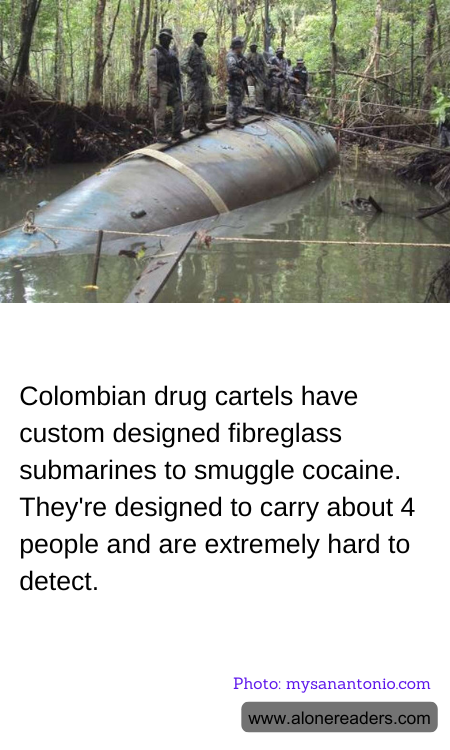
The submarines, often referred to as "narco-subs," are a marvel of covert engineering. Constructed primarily from fiberglass, these vessels are designed to be lightweight yet durable, allowing them to navigate the treacherous waters of the Pacific Ocean with relative ease. Their construction is a closely guarded secret, with each submarine being meticulously crafted to ensure maximum stealth and efficiency. Typically, these submarines are capable of carrying a crew of about four people, including a captain and a few assistants, who are tasked with ensuring the safe delivery of their illicit cargo.
One of the most significant advantages of these submarines is their ability to evade detection. Unlike traditional metal submarines, fiberglass vessels are less likely to be picked up by radar, making them extremely difficult for authorities to track. Additionally, their low profile and muted colors allow them to blend seamlessly into the ocean's surface, further complicating efforts to locate and intercept them. This stealth capability is crucial for the cartels, as it enables them to transport large quantities of cocaine across international waters with minimal risk of interception.
The use of these submarines underscores the ongoing cat-and-mouse game between drug traffickers and law enforcement agencies. Despite significant advancements in surveillance technology and international cooperation, the cartels continue to adapt and innovate, staying one step ahead of those tasked with stopping them. The deployment of narco-subs is just one example of how these organizations are leveraging technology and engineering to maintain their dominance in the global drug trade.
While the existence of these submarines poses a significant challenge for authorities, it also highlights the need for continued vigilance and innovation in the fight against drug trafficking. As long as there is demand for illicit substances, cartels will find ways to supply them, often employing methods that are as sophisticated as they are illegal. The battle against these underwater smugglers is far from over, and it will require a concerted effort from governments, law enforcement, and international organizations to effectively combat this maritime menace.