More About This Card
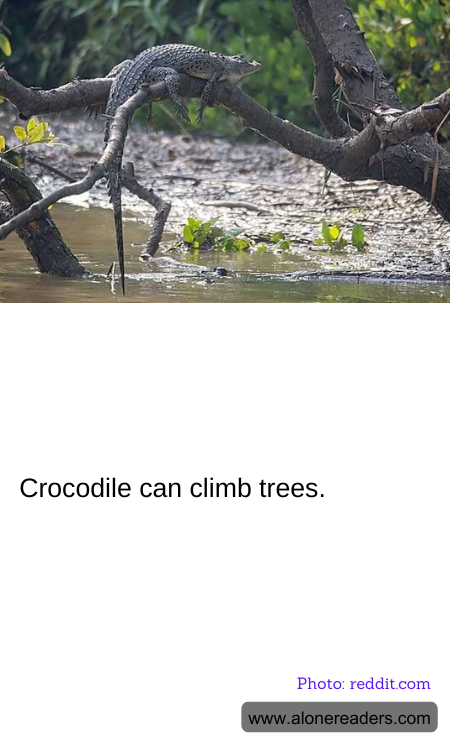
Crocodiles are often depicted as fearsome aquatic predators, lurking beneath the water's surface with only their eyes and nostrils visible. However, recent studies and observations have revealed a surprising behavior that challenges our traditional understanding of these ancient reptiles: crocodiles can climb trees. This unexpected ability adds a new dimension to the crocodile's already impressive repertoire of survival skills.
While it may seem unusual for a creature so closely associated with water to venture into the trees, there are several reasons why a crocodile might choose to do so. One primary motivation is thermoregulation. Crocodiles are ectothermic, meaning they rely on external sources of heat to regulate their body temperature. Climbing trees allows them to bask in the sun, absorbing warmth more efficiently than they might on the ground or in the water. This behavior is particularly beneficial in cooler climates or during the early morning hours when the sun's rays are not yet strong enough to penetrate the water's surface.
Another reason crocodiles might climb trees is to gain a better vantage point for surveying their surroundings. From a higher perch, they can spot potential prey or threats from a distance, giving them a strategic advantage. This elevated position also allows them to keep an eye on their territory, ensuring that no intruders encroach on their domain. In some cases, tree climbing may even serve as a means of escape from larger predators or aggressive conspecifics.
The ability to climb trees is not uniform across all crocodile species. It is more commonly observed in smaller species, such as the African dwarf crocodile and the American crocodile, which possess lighter bodies and more agile limbs. These species are often found in forested areas where trees are abundant, providing ample opportunities for climbing. Larger species, like the saltwater crocodile, are less likely to engage in this behavior due to their size and weight, which make tree climbing more challenging.
Observations of tree-climbing crocodiles have been documented in various parts of the world, including Africa, Australia, and North America. In some cases, crocodiles have been seen resting on branches several meters above the ground, demonstrating remarkable balance and dexterity. These sightings have intrigued scientists and wildlife enthusiasts alike, prompting further research into the ecological and evolutionary implications of this behavior.
The revelation that crocodiles can climb trees serves as a reminder of the adaptability and resilience of these ancient reptiles. It challenges our preconceived notions and encourages us to look beyond the surface when studying the natural world. As we continue to explore the diverse behaviors of crocodiles, we gain a deeper appreciation for their complexity and the intricate ways they interact with their environment. This newfound knowledge not only enriches our understanding of crocodiles but also highlights the importance of preserving their habitats, ensuring that these remarkable creatures continue to thrive for generations to come.