More About This Card
In an unusual case that has captured the attention of music enthusiasts and social policy analysts alike, a man in Sweden has been granted disability benefits due to his purported addiction to heavy metal music. This intriguing situation highlights the complexities of defining and addressing unconventional addictions in modern society.
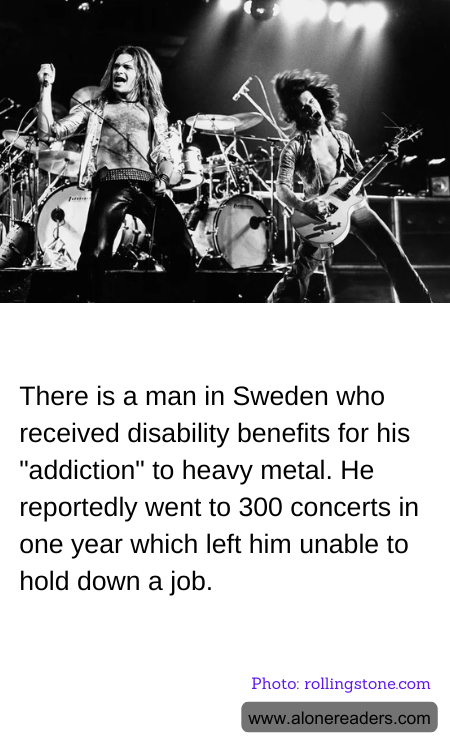
The individual in question, whose identity has been kept confidential, reportedly attended an astonishing 300 heavy metal concerts in a single year. This intense dedication to the genre, while showcasing his passion, also resulted in an inability to maintain steady employment. The man argued that his compulsion to attend these concerts was so overwhelming that it interfered with his capacity to fulfill job responsibilities, ultimately leading him to seek financial assistance from the state.
Sweden, known for its progressive social welfare system, has a history of supporting individuals with various disabilities, including those related to mental health. However, this case pushes the boundaries of traditional definitions of disability. The decision to grant benefits was based on the understanding that the man's addiction significantly impaired his ability to function in a typical work environment, similar to other recognized mental health conditions.
This case has sparked a broader conversation about the nature of addiction and the role of government support. Critics argue that labeling a passion for music as an addiction could set a precedent for other non-traditional claims, potentially straining the welfare system. On the other hand, supporters emphasize the importance of recognizing mental health issues in all their forms, advocating for a more inclusive approach to disability benefits.
The man's story also sheds light on the cultural significance of heavy metal in Sweden. The country has a rich history of producing influential metal bands and boasts a vibrant music scene. For many, heavy metal is more than just a genre; it is a lifestyle and a community. This cultural backdrop may have played a role in the sympathetic response to the man's plight, as it resonates with a broader understanding of music as a vital part of personal identity and expression.
While the specifics of this case are unique, it raises universal questions about the intersection of passion, addiction, and societal support. As societies continue to evolve, so too must their frameworks for understanding and supporting individuals with diverse needs. Whether this case will lead to changes in policy or remain an isolated incident, it undeniably highlights the need for ongoing dialogue about the complexities of addiction and the role of social welfare in addressing them.
In the end, the story of the Swedish man and his love for heavy metal serves as a reminder of the diverse ways in which people experience and interact with the world. It challenges us to consider how we define addiction and disability, and how we can best support those whose lives do not fit neatly into conventional categories.