More About This Card
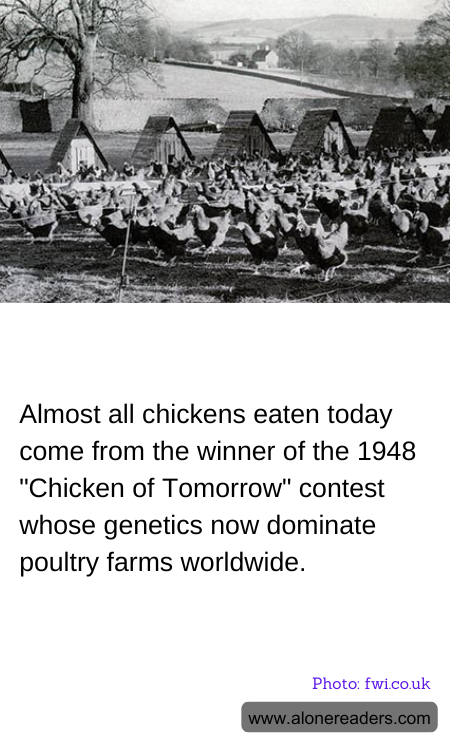
In the world of poultry farming, the "Chicken of Tomorrow" contest held in 1948 stands as a pivotal moment that shaped the future of chicken consumption globally. This contest, organized by the U.S. Department of Agriculture and the Great Atlantic & Pacific Tea Company, sought to find the ideal chicken breed that could meet the growing demand for meat in post-war America. The winner of this contest, a breed developed by Charles Vantress and Henry Saglio, has since become the genetic foundation for almost all chickens consumed today.
The contest was born out of necessity. After World War II, there was a significant increase in the demand for affordable and nutritious meat. The existing chicken breeds were primarily dual-purpose, serving both egg and meat production, but they were not optimized for meat yield. The "Chicken of Tomorrow" contest aimed to create a bird that could grow faster, have more meat, and be more efficient in feed conversion. The winning breed, a cross between the Cornish and White Rock chickens, excelled in these areas, setting a new standard for poultry farming.
The success of the Vantress-Saglio breed was not just in its immediate impact but in its long-lasting influence on poultry genetics. This breed's characteristics—rapid growth, larger breast muscles, and efficient feed conversion—were so advantageous that they became the blueprint for future breeding programs. Over the decades, poultry geneticists have refined these traits, leading to the modern broiler chicken, which can reach market weight in just six to seven weeks, a remarkable improvement from the 16 weeks required in the 1940s.
Today, the legacy of the "Chicken of Tomorrow" contest is evident in the ubiquity of the broiler chicken. These birds dominate poultry farms worldwide, providing a reliable and cost-effective source of protein for billions of people. The genetic lineage from the 1948 contest winner has been so successful that it accounts for the vast majority of the chickens consumed globally. This dominance has also sparked discussions about genetic diversity and animal welfare, as the focus on specific traits has led to concerns about the health and well-being of these birds.
The story of the "Chicken of Tomorrow" contest is a testament to the power of selective breeding and its profound impact on agriculture. It highlights how a single event can reshape an entire industry, influencing not only what we eat but also how food production systems evolve. As we continue to explore sustainable and ethical farming practices, the lessons from this contest remain relevant, reminding us of the delicate balance between innovation and responsibility in feeding the world.