More About This Card
The Vikings, renowned for their seafaring prowess and exploration, were not only skilled warriors but also innovative navigators. Among their many ingenious methods for traversing the vast and often treacherous waters of the North Atlantic, one of the most fascinating was their use of ravens. These intelligent birds played a crucial role in helping the Vikings find land, a testament to the resourcefulness and adaptability of these legendary Norse explorers.
The Vikings' reliance on ravens for navigation was rooted in the bird's natural behavior and keen sense of direction. Before embarking on their voyages, Vikings would bring ravens aboard their longships. Once they were far from the sight of land, they would release a raven into the sky. If the raven flew back to the ship, it indicated that land was not nearby. However, if the raven flew in a particular direction and did not return, it was a clear sign that land lay in that direction. The Vikings would then adjust their course accordingly, following the raven's path to find new shores.
This method was particularly useful in the foggy and unpredictable weather conditions of the North Atlantic, where traditional navigation techniques could be unreliable. The raven's ability to fly long distances and its instinct to seek land made it an invaluable tool for the Vikings, who often ventured into uncharted territories. The success of this technique is evidenced by the Vikings' remarkable voyages, which took them as far as Greenland and North America long before other European explorers.
The significance of the raven in Viking culture extended beyond its practical use in navigation. The bird held a symbolic place in Norse mythology and was closely associated with Odin, the chief of the Norse gods. Odin was often depicted with two ravens, Huginn and Muninn, who flew across the world to bring him information. This mythological connection further elevated the raven's status among the Vikings, making it a revered symbol of wisdom and guidance.
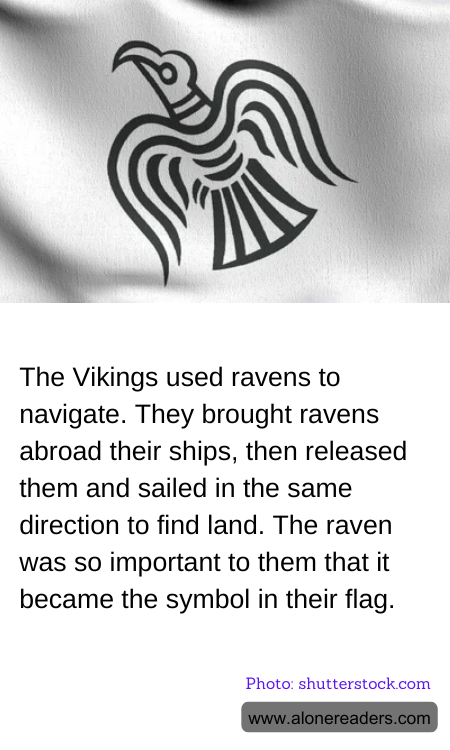
So important was the raven to the Vikings that it became a prominent symbol on their flags and banners. The raven banner, as it was known, was believed to bring victory in battle and was carried into combat by Viking chieftains. This emblem not only represented the Vikings' reliance on the raven for navigation but also embodied their fierce spirit and determination.
In conclusion, the Vikings' use of ravens for navigation is a remarkable example of their ingenuity and deep connection with the natural world. By observing and harnessing the abilities of these birds, the Vikings were able to explore and settle new lands, leaving a lasting legacy that continues to captivate our imagination today. The raven, both a practical tool and a powerful symbol, remains an enduring icon of Viking exploration and adventure.